
Growing up in a Chinese household, mapo tofu was one of the comforting dishes we enjoyed with steamed rice. While traditional Sichuan mapo tofu is known for its bold heat from doubanjiang and Sichuan peppercorns, this family-style version is easier to make with simple pantry ingredients while still delivering the savory, spicy, and flavorful taste that makes this classic dish so popular. Like my eggplant pork, mouth-watering chicken, kung pao chicken, tomato eggs, steamed pork patty, tomato fish, and ma yi shang shu recipe, this dish is packed with authentic Chinese flavors and is perfect for a quick homemade meal. It is best served with steamed rice and a bowl of hot-and-sour soup for lunch or dinner. If you're looking for an authentic Chinese mapo tofu recipe that's beginner-friendly, this recipe will show you exactly how to make it at home. And if you're a tofu lover, be sure to check out my recipes for crispy teriyaki tofu, bean curd pudding, miso soup, and kimchi tofu soup as well.
Like Chinese food? Check out these recipes: har gow, steamed meatballs, hairy gourd vermicelli, steamed shrimp, congee, pork knuckles & ginger stew, pan-fried buns, steamed spare ribs, and lo mai gai.

What is mapo tofu (麻婆豆腐)?
Mapo tofu is a classic Sichuan dish known for its bold, savory, and spicy flavors. Like favorites such as eggplant pork, hot and sour noodle soup, mouth-watering chicken, and hot and sour soup, mapo tofu is a popular comfort food often served with steamed rice.
The name "mapo tofu" (麻婆豆腐) has an interesting history. "Ma" (麻) refers to pockmarks, while "Po" (婆) means an elderly woman or grandmother. The dish is often translated as "Pockmarked Grandma's Tofu" because it is believed to have been created by an older woman with pockmarks on her face in Chengdu, Sichuan Province.
Traditional Sichuan mapo tofu is known for its signature spicy and numbing flavor, which comes from doubanjiang (fermented broad bean paste) and Sichuan peppercorns. The dish typically consists of soft tofu cubes, ground pork or beef, and a rich, flavorful sauce. It is often garnished with chopped green onions and served with steamed rice.
Today, mapo tofu is enjoyed not only throughout China but also around the world. As the dish spread to different regions, many variations emerged to suit local tastes. Some versions are extremely spicy, while others are milder and more family-friendly. In Hong Kong, for example, many home cooks use Lee Kum Kee garlic chili sauce to create a flavorful dish with less heat. At home, I often adjust the spice level to make a kid-friendly version that my family can enjoy together.
What does mapo tofu taste like?
Ma po tofu is known for its complex and bold flavor. In general, the dish is spicy and savory, often with a numbing sensation from Sichuan peppercorns. The level of heat depends on the amount of chili and Sichuan peppercorns used. You can adjust the heat from mildly spicy to very hot, depending on the recipe and personal preferences.
Also, the dish is rich in umami because of doubanjiang (fermented bean paste), soy sauce, and meat. Umami is a savory taste that adds depth and richness to the overall flavor. Besides, the tofu in this dish is soft and silky. It absorbs the flavors of the spicy sauce, which provides a contrast to the heat and richness of the other ingredients.
What Is Mapo Tofu Sauce Made Of?
Mapo tofu sauce is what gives this classic Sichuan dish its bold, savory, spicy, and slightly numbing flavor. Traditional mapo tofu sauce is typically made with doubanjiang (fermented broad bean paste), soy sauce, Sichuan peppercorns, and a small amount of sugar to balance the heat.
Doubanjiang is one of the key ingredients in authentic Sichuan mapo tofu. It adds a deep umami flavor along with a rich, spicy taste. Some recipes also use chili bean sauce (Toban Djan), which contributes additional heat and complexity. Soy sauce enhances the savory flavor, while Sichuan peppercorns provide the signature numbing sensation for which Sichuan cuisine is known. A touch of sugar helps balance the spicy and salty flavors.
In this easy mapo tofu recipe, I simplify the sauce by using homemade Sichuan-style chili oil instead of doubanjiang. It is a quicker, more accessible option for home cooks, since doubanjiang can be difficult to find in some grocery stores. Even with this shortcut, the sauce still delivers the delicious spicy, savory, and flavorful taste that makes mapo tofu so popular.
Why You'll Love This Recipe:
- Ready in only 20 minutes.
- Made with simple ingredients.
- Authentic Chinese family-style flavor.
- Easy to adjust the spice level.
- Perfect with steamed rice or noodles.
- Includes step-by-step photos and video.
How spicy is this mapo doufu dish?
This mapo tofu recipe is not too spicy. It is more mild-medium hot. You can adjust the amount of homemade Sichuan-style chili oil to suit your spice level.
What to serve with mapo tofu?
Steamed white rice is the most traditional and popular side dish for mapo tofu. The fluffy rice helps balance the bold, spicy flavors while soaking up the rich and savory sauce.
Another delicious option is to serve mapo tofu over noodles, such as egg, wheat, or rice noodles. The noodles absorb the flavorful sauce, turning the dish into a hearty one-bowl meal.
To balance the richness of the dish, pair it with simple vegetable sides such as Chinese amaranth spinach, bok choy, yu choy sum, or gai lan (Chinese broccoli). Lightly stir-fried or blanched greens provide a fresh contrast to the spicy sauce.
For a complete Chinese meal, serve mapo tofu with hot-and-sour soup, tomato eggs, Chinese garlic chives and eggs, steamed pork patty, or pickled cucumber. These dishes complement the bold flavors of mapo tofu and make an easy lunch or dinner for the whole family.
Do I have to use doubanjiang?
Doubanjiang (豆瓣醬) is a fermented bean paste, and traditionally, people add it to mapo tofu for its unique, umami-rich flavor. However, you can still make a tasty version of the dish without it. Not many places in the States carry doubanjiang, so you may need to find it at Asian stores. In this mapo tofu recipe, I do not use doubanjiang because it is not easy to find, but it is still delicious and amazing.
What type of tofu to use for mapo doufu?
We normally use soft tofu because it has a high water content and a creamy, custard-like texture. It breaks apart easily, making it a popular choice for mapo tofu. Always look for tofu labeled as "soft" or "silken" for the best results. The soft, delicate texture of the tofu allows it to absorb the flavors of the spicy, savory sauce, creating a harmonious and satisfying dish.
Personally, I like to use soft tofu for mapo doufu, miso soup, and kimchi tofu soup because of its smooth and silky texture. However, you can use medium-firm or firm tofu if you cannot find soft tofu.
When handling soft or silken tofu, it's important to be gentle to prevent it from breaking into small pieces during cooking. You can cut the tofu into cubes or spoon it into the dish. Add the tofu toward the end of the cooking process to allow it to heat through without becoming mushy.
Can I make vegan mapo tofu?
Absolutely, you can make a vegan version by using plant-based ingredients to replace the traditional animal-based meat. You can try using eggplant, peas, or other vegetables to replace the meat, and use a vegetarian-friendly oyster sauce.
What are the ingredients for authentic mapo tofu?
Traditional mapo doufu (麻婆豆腐), also known as mapo tofu, is made with tofu, minced meat, and a flavorful spicy sauce. Authentic Sichuan mapo tofu typically includes doubanjiang (fermented broad bean and chili paste), douchi (fermented black beans), ground pork or beef, soft tofu, and Sichuan peppercorns. These ingredients create the dish's signature spicy, savory, aromatic, and numbing flavors.
Traditional Sichuan mapo tofu is known for its bold heat and intense flavor. However, this Chinese mapo tofu recipe uses simple pantry ingredients to create a milder, family-friendly version that is still delicious, savory, and packed with flavor.

The main ingredients in this recipe include ground pork, soft tofu, homemade Sichuan-style chili oil, garlic, green onions, soy sauce, oyster sauce, vegetable oil, sugar, salt, water, and cornstarch. Together, these ingredients create a rich and flavorful sauce that pairs perfectly with steamed rice.
Substitutions:
Can I use other chili sauce instead of homemade Sichuan chili oil?
Yes, you can use Lee Kum Kee chili bean sauce or garlic chili sauce instead. Personally, I like this homemade Sichuan-style chili oil because it is made from Sichuan peppercorns and other spices. It's flavorful and aromatic. The homemade chili oil can be used not only for this Chinese mapo tofu recipe but also for many other dishes, such as beef chow fun, fried rice, beef noodle soup, ma yi shang shu, pan-fried bun, boiled dumplings, and more. Also, it is convenient because we usually make the chili oil in a batch, and it can last for a while. I use it to make mapo tofu and other dishes when I like to.
Is it ok to use other meat?
Yes, ground pork can be substituted with ground beef, chicken, or even turkey. For a vegetarian version, you can omit the meat or use finely chopped mushrooms.
Storage:
How to store mapo tofu?
If you have leftover mapo doufu, store it in an airtight container in the refrigerator. Allow it to cool to room temperature before placing it in the fridge. Properly stored, it can last 3-4 days in the refrigerator.
Can I freeze mapo tofu?
While tofu doesn't freeze well due to its texture, you can freeze the Mapo Tofu sauce separately. Allow the sauce to cool, then transfer it to a freezer-safe container or zip-top bag. Leave some space at the top to account for expansion. Frozen mapo tofu sauce can last for up to 2-3 months.
How to reheat mapo tofu?
To reheat mapo doufu, you can warm it up in the microwave for 1-2 minutes, covered with a wet paper towel if it's straight out of the refrigerator. When they are frozen, thaw them and warm the sauce on the stovetop over low to medium heat. Then, add fresh soft tofu.
Pro tips for how to make mapo tofu:
- When making mapo tofu, the amount of chili oil can be adjusted based on your spice preference. I usually add about ½ tablespoon at a time and taste as I go. For my family, 1.5 tablespoons of homemade Sichuan-style chili oil gives the perfect balance of heat and flavor.
- I prefer using homemade Sichuan-style chili oil because it is highly aromatic and adds a deep, fragrant flavor to both the ground pork and tofu. It enhances the overall richness of the dish even with simple ingredients.
- For the best texture, soft tofu is recommended because it creates a silky, delicate mouthfeel. However, some people prefer medium or firm tofu since it holds its shape better during cooking.
- If you are using soft tofu, avoid vigorous stirring. Add the tofu at the end and gently fold it into the sauce to prevent it from breaking apart.
Troubleshooting:
Why is my mapo tofu watery?
The cornstarch slurry may not have cooked long enough. Simmer until the sauce thickens.
Why is my mapo tofu too spicy?
If your mapo tofu is spicy, reduce the amount of chili oil or serve with extra steamed rice.
Why does my tofu fall apart?
Use gentle folding motions and avoid over-stirring.
People Also Ask:
Doufu (tofu) has a bland taste. I would say pretty much no taste at all. It usually cooks with something, and the sauce has strong flavors, like those of crispy teriyaki tofu.
Soft tofu is delicate. Stir gently and add it near the end of cooking.
Yes. The sauce can be made 1-2 days ahead and refrigerated. Add fresh tofu when reheating for the best texture.
Not usually. Soy sauce and oyster sauce contain wheat. Use gluten-free alternatives if needed.
Yes. Firm tofu holds its shape better, though soft tofu provides the most authentic texture.
Instructions for how to make Chinese mapo tofu:

Preparation:
1. Minced 4 cloves of garlic (1 oz).

2. Cut 3 sticks of green onion (1.5 oz).

3. Cut a block of soft tofu (19 oz) into cubes and set them aside.

Cooking the sauce:
4. Add ½ tablespoon of vegetable oil into a non-stick pan. After that, turn the heat to medium-high and stir-fry the minced garlic briefly.
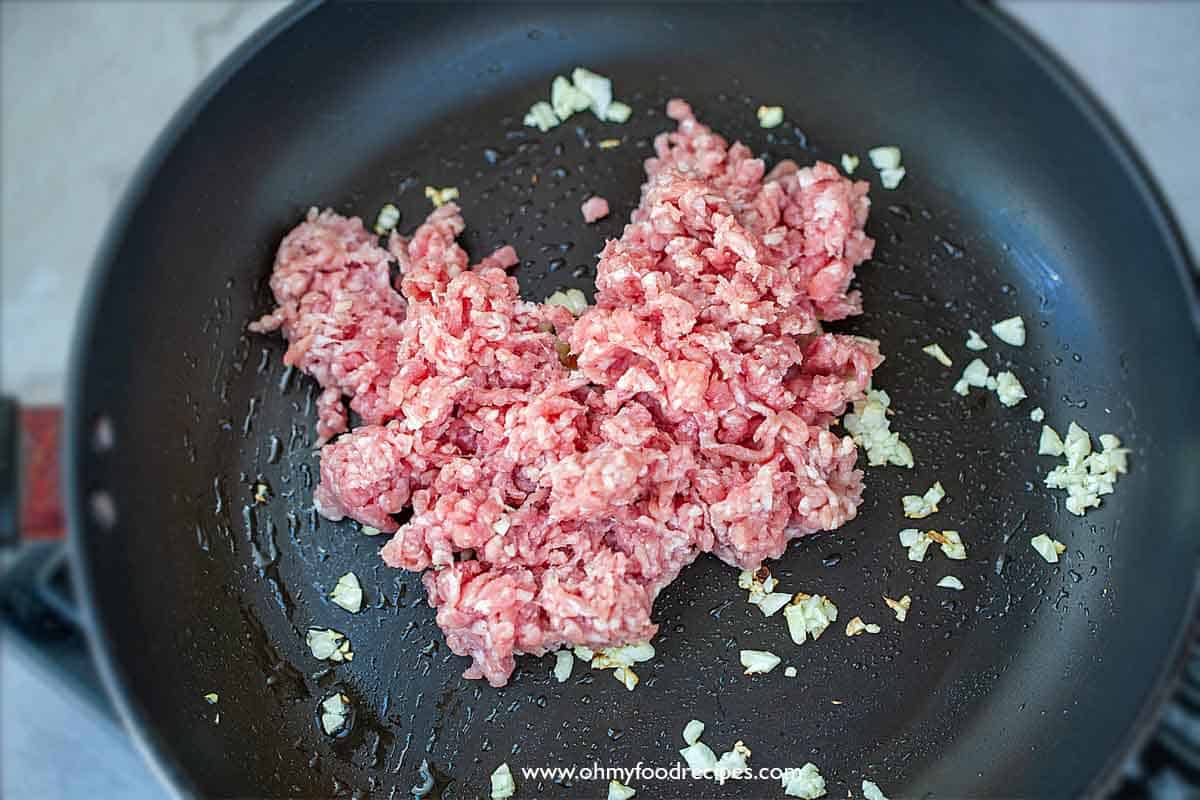
5. Next, add ½ pound of ground pork and stir-fry or loosen up the ground pork

6. The following, add ¼ teaspoon of salt, 1 tablespoon of soy sauce, 2 tablespoons of oyster sauce, 1 teaspoon of sugar, 1.5 tablespoons of homemade chili oil, ½ cup of water, and keep stir-frying until the pork is cooked.

Cornstarch mixture:
7. In a small container, mix 1 tablespoon of cornstarch and 1 tablespoon of water.

Sauce:
8. After, pour the cornstarch mixture into the pork and keep stir-frying until the sauce is thickened.

Add tofu:
9. Lastly, add cut tofu and be gentle. Do not stir too hard, as the soft tofu breaks easily, and cook it for a minute.

10. Top with green onion from step 2, and ready to serve.

Enjoy this simple, easy, and delicious Chinese mapo tofu recipe! Also, check out these recipes: claypot rice, lobster yee mein, Chinese sticky rice, turnip cake, sweet and sour pork, salt & pepper squid, char siu, and crispy noodles.
YOU MAY ALSO LIKE THESE RECIPES:
Subscribe to Oh My Food Recipes to get our new recipes delivered straight to your inbox! Follow along on Facebook, Pinterest, and Instagram for all the latest
updates.

MaPo Tofu
Equipment
- 1 Pan
Video
Ingredients
- ½ pound Ground pork
- 1 block Soft Tofu (19 oz)
- 3 sticks Green onion (1.5 oz)
- 4 cloves Garlic (1 oz)
- ½ tablespoon Vegetable oil
- 1 tablespoon Soy sauce
- ¼ teaspoon Salt
- 2 tablespoons Oyster sauce
- 1 teaspoon Sugar
- 1.5 tablespoons Chili oil (Homemade Sichuan style)
- ½ cup Water
THICKEN SAUCE:
- 1 tablespoon Cornstarch
- 1 tablespoon Water
Instructions
- Minced 4 cloves of garlic (1 oz).
- Cut 3 sticks of green onion (1.5 oz).
- Cut a block of soft tofu (19 oz) into cubes and set them aside.
- Add ½ tablespoon of vegetable oil into a non-stick pan. After that, turn the heat to medium-high and stir-fry the minced garlic briefly.
- Next, add ½ pound of ground pork and stir-fry or loosen up the ground pork.
- The following, add ¼ teaspoon of salt, 1 tablespoon of soy sauce, 2 tablespoons of oyster sauce, 1 teaspoon of sugar, 1.5 tablespoons of homemade chili oil, ½ cup of water, and keep stir-frying until the pork is cooked.
- In a small container, mix 1 tablespoon of cornstarch and 1 tablespoon of water.
- After, pour cornstarch mixture with the pork and keep stir frying until the sauce is thickened.
- Lastly, add cut tofu and be gentle. Do not stir too hard, as the soft tofu breaks easily, and cook it for a minute.
- Top with green onion from step 2, and ready to serve.
Notes
Pro tips for how to make mapo tofu:
-
When making mapo tofu, the amount of chili oil can be adjusted based on your spice preference. I usually add about ½ tablespoon at a time and taste as I go. For my family, 1.5 tablespoons of homemade Sichuan-style chili oil gives the perfect balance of heat and flavor.
-
I prefer using homemade Sichuan-style chili oil because it is highly aromatic and adds a deep, fragrant flavor to both the ground pork and tofu. It enhances the overall richness of the dish even with simple ingredients.
-
For the best texture, soft tofu is recommended because it creates a silky, delicate mouthfeel. However, some people prefer medium or firm tofu since it holds its shape better during cooking.
-
If you are using soft tofu, avoid vigorous stirring. Add the tofu at the end and gently fold it into the sauce to prevent it from breaking apart.


Jenn says
Excellent taste and easy to make. I make this often and it tastes better than take out! Thank you for sharing this, we LOVE it!
Tracy O. says
Hi Jenn,
Thank you very much for your kind words! It genuinely makes me happy to hear that you love the recipe and prepare it often. Knowing that it's even better than takeout is the greatest compliment! I appreciate you taking the time to share your feedback!