
Pan-fried pork buns, also known as sheng jian bao (生煎包), are a beloved Chinese street food, famous for their crispy, golden bottoms, fluffy, bread-like wrapper, and juicy pork filling. Popular classic Chinese favorites like scallion pancakes, curry fish balls, har gow, and pan-fried sticky rice cakes, these authentic Chinese pan-fried buns are perfect for breakfast, lunch, dinner, or a satisfying snack. Similar to pan-fried dumplings, sheng jian bao features a soft, yeasted bun wrapper instead of a thin dumpling skin, creating a delicious contrast of textures. Follow this authentic sheng jian bao recipe with detailed step-by-step photos and a helpful video tutorial below the recipe card to learn how to make flavorful Chinese pan-fried pork bao buns at home.
Love Asian food? Check out these recipes: yam leaves stir-fry, honeydew popsicles, tom yum kung, papaya milk, beef pho noodle soup, lobster yee mein, and California rolls.

What is sheng jian bao?
Pan-fried buns, also known as sheng jian bao (生煎包) or shui jian bao (水煎包), are a popular Chinese street food originating from Shanghai. Often called Shanghai pan-fried pork buns, these savory buns are widely enjoyed throughout China and Taiwan for their crispy golden bottoms, soft, fluffy wrappers, and juicy pork filling. Traditional sheng jian bao is typically filled with seasoned ground pork, fresh scallions, and ginger, creating a flavorful and satisfying bite.
Authentic Chinese pan-fried pork buns are made using a unique cooking method that combines pan-frying and steaming. The bottom of each bun is first pan-fried to develop a delicious crispy crust, then water is added to the pan to steam the buns until the dough becomes soft and fluffy while the filling cooks through. This technique creates the signature contrast of crispy, tender, and juicy textures that makes sheng jian bao so irresistible.
The process of making sheng jian bao is similar to preparing pan-fried dumplings. First, small pieces of dough are rolled into thin circles, then filled with a spoonful of savory pork mixture. The dough is carefully pleated and pinched into a sealed pouch before being cooked. Once pan-fried and steamed to perfection, these homemade Chinese pan-fried buns are best served hot with flavorful dipping sauces such as soy sauce, Chinese black vinegar, and chili oil for an authentic street-food experience.
What is the difference between sheng jian bao and dumplings?
Unlike traditional dumplings that use thin wrappers, sheng jian bao uses a soft, fluffy dough similar to bread. The buns are both pan-fried and steamed, giving them a crispy bottom and soft top.
What is the difference between sheng jian bao and xiao long bao?
Sheng jian bao has a thicker, yeasted dough wrapper with a crispy pan-fried bottom, while xiao long bao (soup dumplings) has a thin, delicate wrapper and is fully steamed. Both are juicy, but sheng jian bao offers a crispier and more bread-like texture.
What makes Shanghai pan-fried pork buns special?
Sheng jian bao is one of Shanghai's most iconic street foods, often enjoyed fresh from roadside vendors in the early morning. The sizzling sound as the buns cook is part of what makes this dish so beloved and irresistible combination of textures and flavors.
While many people love Shanghai soup dumplings (xiao long bao) for their delicate, thin wrappers and juicy, soup-filled centers, sheng jian bao offers a heartier yet equally skillful culinary experience.
Like soup dumplings, sheng jian bao is filled with flavorful, juicy pork. However, what sets these Chinese pan-fried buns apart is their fluffy, bread-like wrapper and signature crispy golden bottom. The contrast between the crunchy base, the soft, steamed top, and the savory filling makes them truly special.
Signature Cooking Method
Sheng jian bao uses a combination of pan-frying and steaming techniques. The buns are first placed in a lightly oiled hot pan, where the bottoms are fried until lightly crisp. Water is then added, and the pan is covered to steam the buns until fully cooked. Once the water evaporates, the bottoms develop their iconic golden-brown crust while the tops remain soft and fluffy.
Distinctive Dough Texture
Unlike traditional dumplings, Shanghai pan-fried pork buns use a yeasted dough that creates a thicker, bread-like wrapper. This soft yet sturdy dough helps hold the juicy filling while providing a satisfying bite.
Juicy, Flavorful Filling
Authentic sheng jian bao is typically filled with seasoned ground pork, ginger, scallions, and aromatic broth or water-infused meat mixture. Beating the pork filling and incorporating ginger-scallion water helps create a tender, juicy, and savory center.
Classic Toppings
To finish, these delicious buns are often topped with black sesame seeds and chopped green onions, adding extra aroma, flavor, and visual appeal.
Why People Love Sheng Jian Bao
Sheng jian bao stands out because it combines:
- Crispy bottom crust
- Soft, fluffy bun texture
- Juicy pork filling
- Savory aroma
- Traditional Shanghai street food heritage
Whether enjoyed for breakfast, lunch, or as a snack, Shanghai pan-fried pork buns deliver an authentic Chinese food experience that is both comforting and unforgettable.
How do I get crispy bottoms on sheng jian bao?
To achieve the signature crispy golden bottom on sheng jian bao, heat a non-stick pan over medium-low heat and add a thin layer of oil. Place the buns bottom-side down in the pan and cook until the bottoms turn lightly golden brown. Next, pour in a cornstarch-water or flour-water mixture, then cover the pan with a lid and steam the buns until the filling is fully cooked and the liquid has evaporated. As the water cooks off, the bottoms will develop a delicious crispy crust while the tops remain soft and fluffy.

What are the ingredients for Chinese pan fried pork buns?
The ingredients for this sheng jian bao (pan-fried pork buns) recipe are divided into 3 main parts. The dough, filling, and dipping sauce.

For the dough, the ingredients are all-purpose flour, water, yeast, salt, sugar, and vegetable oil. The filling ingredients are ground pork, ginger, green onions, water, salt, sugar, white pepper, garlic powder, sesame oil, and oyster sauce.
What dipping sauce goes best with sheng jian bao?

Traditional dipping sauces include soy sauce, Chinese black vinegar, chili oil, and water. But you can also dip into XO sauce and garlic chili sauce if you like.
Substitutions:
Flour Substitutions
You can use bread flour. But it creates a slightly chewier texture.
Meat Filling Substitutions
You can substitute the traditional pork filling with ground chicken for a lighter flavor or ground turkey for a leaner option. While less traditional, ground beef can also be used for a richer, more robust taste. For a vegetarian version, a combination of tofu and mushrooms works well, creating a savory and satisfying filling while keeping the texture hearty and flavorful.
Slurry for Crispy Bottom Substitutions
The best option for crispiness is cornstarch. However, all-purpose flour works as an alternative. You can also use potato starch, which creates a crispy crust.
Storage:
How do I store leftover pan-fried pork buns?
Store leftover buns in an airtight container in the refrigerator for up to 3 days. When reheating in the microwave, place the buns on a microwave-safe plate and cover them with a damp paper towel. Heat in 20-30 second intervals until warmed through. The damp paper towel helps prevent the buns from drying out and keeps the dough soft. Or, you can steam it in the bamboo basket for 5-7 minutes.
If you want to bring back some crispiness, you can quickly pan-fry them for 1-2 minutes after microwaving or steaming.
Can I freeze sheng jian bao?
Yes, you can freeze uncooked sheng jian bao after assembling them. Place them on a tray until frozen, then transfer to a freezer-safe bag. Cook directly from frozen by adding a few extra minutes to the steaming time.
Cooking Tips for How to Make Pan-Fried Pork Buns (Sheng Jian Bao)
Dough
- Knead the dough in a stand mixer for about 15 minutes until smooth and elastic.
- The dough will be soft and slightly sticky-lightly wet your hands when handling it to prevent sticking.
- Lightly grease a bowl with oil, place the dough inside, and cover it with a damp cloth or plastic wrap.
- Quick proofing tip: Preheat your oven to 200°F (93°C) for a few minutes, then turn it off. Place the covered dough in for 20-30 minutes to speed up the rise.
- Lightly dust your work surface with flour when dividing the dough into pieces.
Filling
- In a mixing bowl, combine ground pork, seasonings, and ginger-scallion water.
- Use an electric mixer to blend everything thoroughly until the mixture becomes sticky and well combined, about 3-5 minutes. This helps create a juicy and tender filling.
Wrapping
- Take one piece of dough and flatten it into a circle using your hand or a rolling pin.
- Place about 1 tablespoon of filling in the center.
- Carefully pleat and pinch the edges together to seal into a bun shape (see video below the recipe card for technique).
- Avoid overfilling-too little filling leaves leftovers, while too much makes the bun hard to seal and may cause it to burst during cooking.
Cooking
- Heat a non-stick pan over medium-low heat and add a thin layer of oil.
- Place the buns in the pan and let them rest for about 5 minutes (optional resting step for fluffier texture).
- Pan-fry for 2-3 minutes until the bottoms turn lightly golden.
- Pour in a cornstarch-water or flour-water mixture, then cover with a lid and steam until the liquid almost evaporates.
- Remove the lid and continue cooking until the bottoms become golden brown and crispy.
- Turn off the heat and optionally sprinkle with black sesame seeds and chopped green onions.
Dipping Sauce
- Mix together soy sauce, Chinese black vinegar, homemade chili oil, and a little water.
- Stir well and serve alongside the buns.
- You can also keep it simple with just soy sauce or chili oil, XO sauce, or garlic chili sauce, depending on your preference.
Common Problems & Fixes:
Why are my pan-fried buns not fluffy?
Your buns may not be fluffy if the dough did not proof properly, the yeast was inactive, or too much flour was used. Make sure the dough rises fully before shaping.
Why are the bottoms not crispy?
If the bottoms of your pan-fried bao aren't crispy, it's usually a heat, oil, or moisture balance issue.
Why did my sheng jian bao burst while cooking?
Pan-fried bao usually burst during cooking when the wrapper is under tension, or the filling expands too fast. Overfilled buns, poor sealing or weak pleats, and dough too thin in the center will cause the bao to burst while cooking.
FAQs:
Yes, you can substitute the pork filling with chicken, beef, shrimp, or vegetable fillings like mushrooms, cabbage, or tofu.
Of course! You can make the Chinese pan-fried pork buns ahead of time and freeze them. To freeze it, place the uncooked buns on a tray lined with parchment paper, or dust them with flour. Then freeze the bao buns until solid, transfer them to a ziplock bag, and freeze for up to a few months.
No, do not thaw it before cooking. Just place the frozen bao in the greased pan and pan-fry it as normal.
You can use store-bought dough for sheng jian bao, but the results will be a little different from traditional ones.
Restaurants get the "soup" inside sheng jian bao by making a broth with naturally gelatin-rich ingredients, creating a gelatinous broth (aspic) that melts during cooking. In this recipe, I added liquid and blended it with the meat at high speed, which also helps make the filling juicy.
I recommend using Chinese black vinegar because regular white vinegar is stronger and more sour. And, you may have to adjust the amount.
Instructions for how to make Chinese pan-fried pork buns:
Dough:

1. Pour 1 cup of water into the Bosch mixer.

2. Then, add ½ tablespoon of vegetable oil, 1 teaspoon of sugar, and 1 teaspoon of yeast. Turn on the lowest setting #1, mix it a little bit. Turn off and wait for 5 minutes.

3. Meanwhile, put 2 cups of all-purpose flour into a bowl, add ⅛ teaspoon of salt, and mix it well.

4. Turn on the mixer to the lowest setting #1, and slowly add the flour mixture from step 3. When the dough is formed, turn off the mixer. Then cover the lid and turn the mixer to medium-high speed # 3. Let it run for 15 minutes.

5. Spray some oil in a bowl. After the dough is done, take it out and place it into a bowl. (The dough is sticky, so dip some water on your hands when you take out the dough.)

6. Cover the dough with a wet cloth and let it rise. My trick for speeding up the rise time is to preheat the oven to 200°F. Then, turn off the oven. Put the dough into the oven and cover with a wet cloth for 20-30 minutes.
Filling:
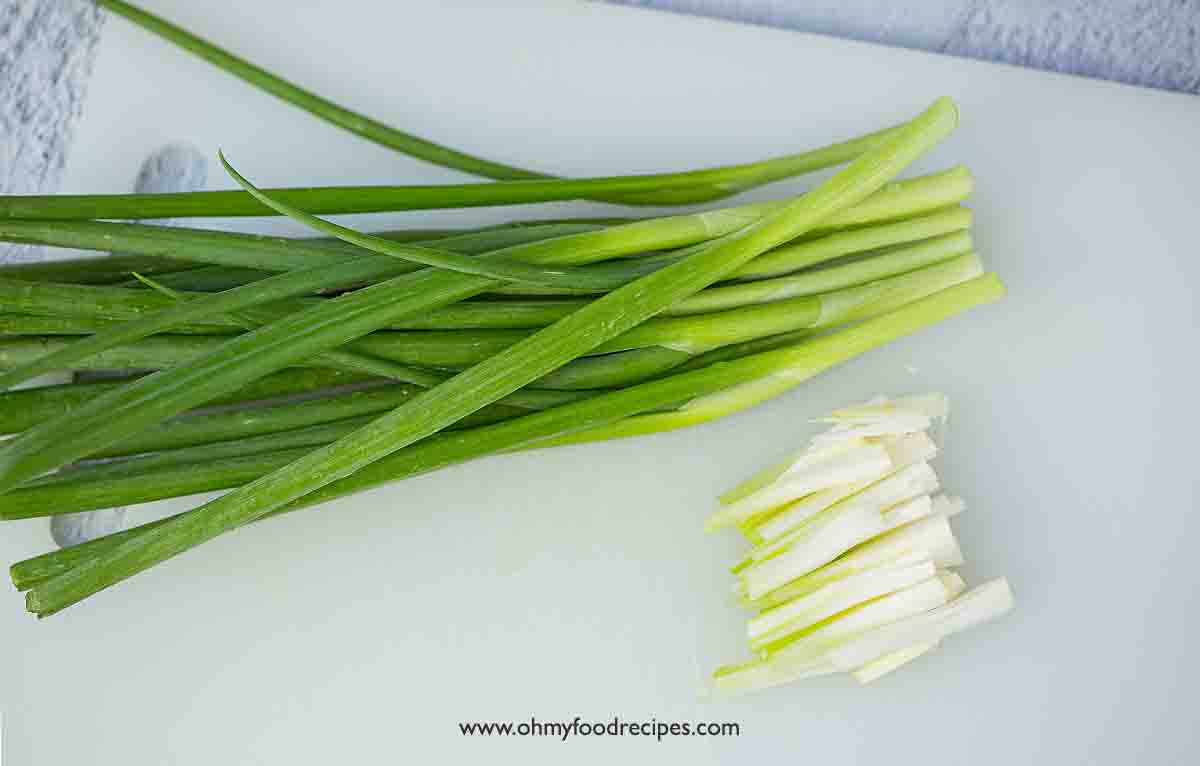
7. Wash and cut 8 sticks (3.8 oz) of green onions. Cut the top white part into strips.

8. Then, cut the rest of the green onions into pieces.

9. Grind 4 slices (1 oz) of ginger.

10. After that, put the white part of the green onion into a bowl and add 1 slice of grated ginger.
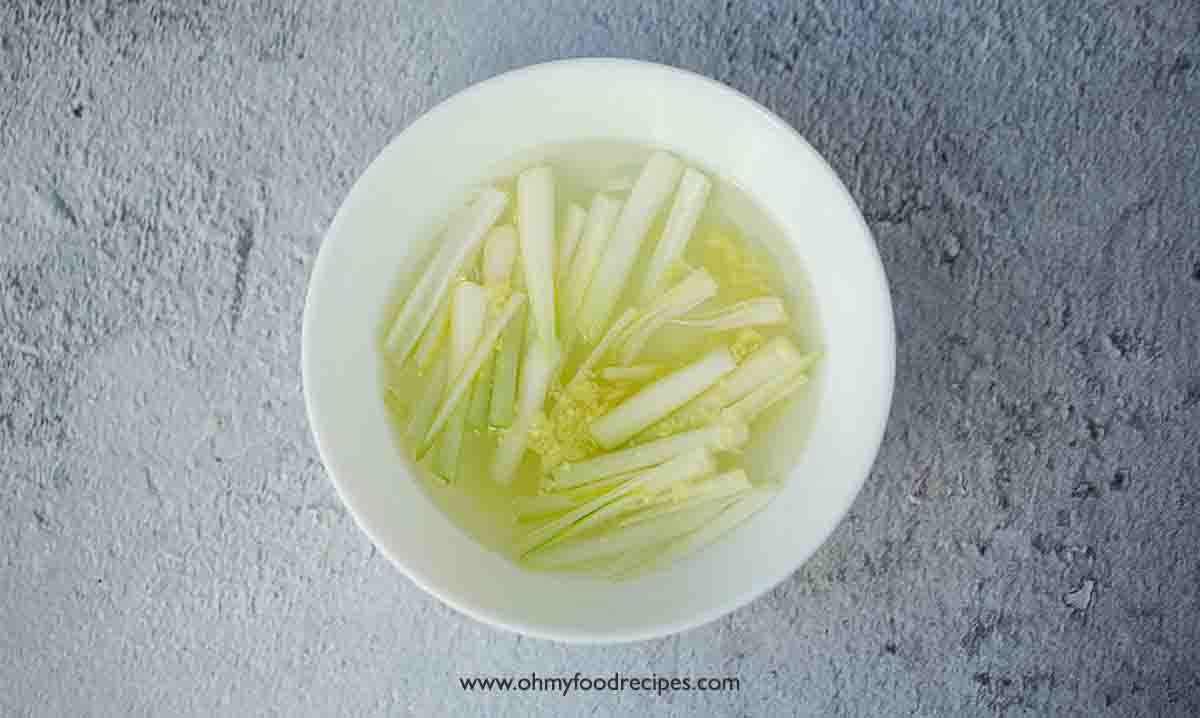
11. Pour ½ cup of water into the bowl and rub the white part of the green onions and ginger very well. This helps to release the aroma of green onion and ginger into the water.

12. Drain the green onion and ginger, then set the green onion ginger water aside.

13. Put 1 pound of ground pork (85% lean and 15% fat) into a mixing bowl.

14. Next, put ½ teaspoon of salt, 1 teaspoon of sugar, ⅛ teaspoon of white pepper, 1 teaspoon of garlic powder, and 3 tablespoons of oyster sauce.

15. Then, add 1 tablespoon of sesame oil, 3 slices of grated ginger from step 9, and the green onion ginger water from step 12.
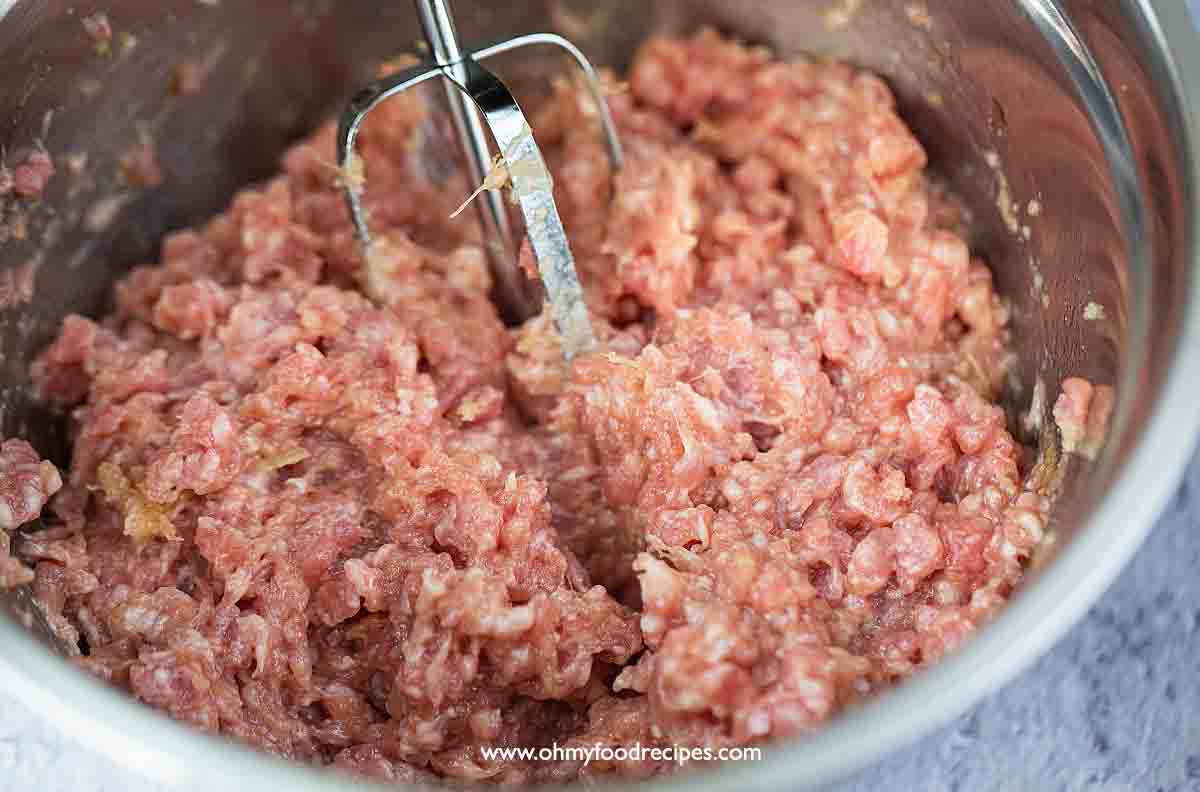
16. Use the electric mixer to mix the ingredients well and beat the meat fine for 3-5 minutes.

17. Put the green onions from step 8 into the meat mixture and mix the filling well.
Dividing dough:

18. When the dough rises to double its size, take it out. The dough is soft and sticky, so wet your hands with water before taking it out.

19. Dust 2 tablespoons of flour on the surface, divide the dough into 3 rolls.

20. Stretch the dough a little bit and cut it into 12 pieces. It can make around 36-40 buns depending on the size. I did 36, therefore I cut them into 12 pieces each.
Wrapping:
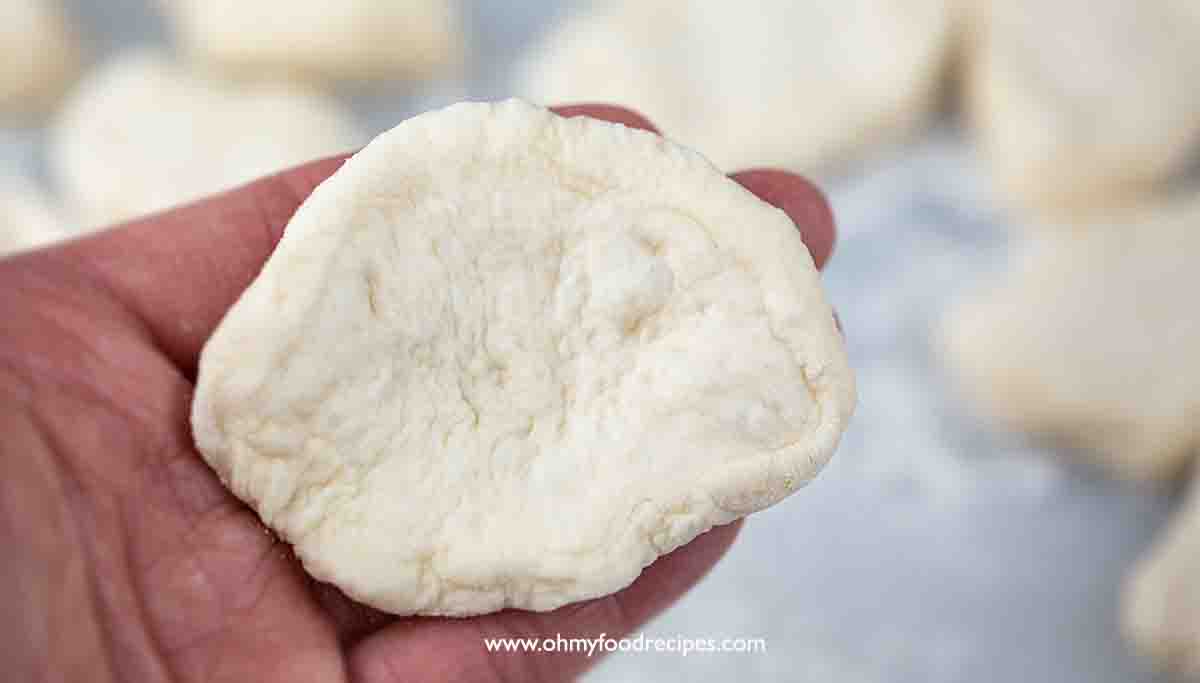
21. Take a piece of dough, stretch and slightly press it.

22. Put a big tablespoonful of filling on the dough.

23. Pull the side of the dough and fold it. See details in the video below the recipe card.

24. Pour ½ tablespoon of vegetable oil into the non-stick pan. Then, use a brush to brush the oil around the pan.
Cooking:

25. Repeat folding the bao buns and place them into the greased pan. Cover the bao buns with a wet cloth and wait for 5 minutes.

26. In a container, put ½ cup of water and 1 teaspoon of cornstarch (you can use regular flour). Mix it well.

27. Turn on a medium-small fire, place the pan over the stove, and let it pan-fry the bao for 2-3 minutes. Then, pour the cornstarch mixture from step 26 into the pan. Cover the lid and let it cook until the water almost dries out. (It's around 6-8 minutes.)

28. Open the lid, sprinkle ½ teaspoon of black sesame seeds and 1 tablespoon of green onion for decoration. (This is optional.)

29. For the dipping sauce, put 1 tablespoon of soy sauce, 1 teaspoon of black vinegar, 1 tablespoon of homemade chili oil, and 1 tablespoon of water into a container. Mix it well and serve with the pan-fried pork buns.

Enjoy this delicious Chinese pan-fried pork buns recipe! Also, check out these recipes: gai lan, turnip cake, garlic chives eggs, steamed pork patty, orange chicken, and boiled dumplings.
You May Also Like These Recipes:
Subscribe to Oh My Food Recipes to get our new recipes delivered straight to your inbox! Follow along on Facebook, Pinterest, and Instagram for all the latest updates.

Pan Fried Buns
Equipment
- 1 Electric mixer
- 1 Bread mixer (Bosch)
Video
Ingredients
Dough:
- 1 cup Water
- ½ tablespoon Vegetable oil
- 1 teaspoon Active dry yeast
- 1 teaspoon Sugar
- 2 cups All purpose flour
- ⅛ teaspoon Salt
Filling:
- 1 pound Ground pork
- ½ teaspoon Salt
- 1 teaspoon Sugar
- ⅛ teaspoon White pepper
- 1 teaspoon Garlic powder
- 3 tablespoons Oyster sauce
- 1 tablespoon Sesame oil
- ½ cup Water (Use the white part of green onions and 1 slice of grind ginger to make green onion ginger water.)
- 4 slices Ginger (1 oz, grind)
- 8 sticks Green onions (3.8 oz)
Dipping sauce:
- 1 tablespoon Soy sauce
- 1 teaspoon Black vinegar
- 1 tablespoon Homemade chili oil
- 1 tablespoon Water
Pan frying:
- ½ tablespoon Vegetable oil
- ½ cup Water
- 1 teaspoon Cornstarch
Topping: (Optional)
- ½ teaspoon Black sesame seeds
- 1 stick Green onion (1 tablespoon)
Instructions
- Then, add ½ tablespoon of vegetable oil, 1 teaspoon of sugar, and 1 teaspoon of yeast. Turn on the lowest setting #1, mix it a little bit. Turn off and wait for 5 minutes.
- Meanwhile, put 2 cups of all-purpose flour into a bowl, add ⅛ teaspoon of salt, and mix it well.
- Turn on the mixer to the lowest setting #1, and slowly add the flour mixture from step 3. When the dough is formed, turn off the mixer. Then cover the lid and turn the mixer to medium-high speed # 3. Let it run for 15 minutes.
- Spray some oil in a bowl. After the dough is done, take it out and place it into a bowl. (The dough is sticky, so dip some water on your hands when you take out the dough.)
- Cover the dough with a wet cloth and let it rise. My trick for speeding up the rise time is to preheat the oven to 200°F. Then, turn off the oven. Put the dough into the oven and cover with a wet cloth for 20-30 minutes.
- Wash and cut 8 sticks (3.8 oz) of green onions. Cut the top white part into strips.
- Then, cut the rest of the green oniThen, cut the rest of the green onions into pieces. ons into pieces.
- Grind 4 slices (1 oz) of ginger.
- After that, put the white part of the green onion into a bowl and add 1 slice of grated ginger.
- Pour ½ cup of water into the bowl and rub the white part of the green onions and ginger very well. This helps to release the aroma of green onion and ginger into the water.
- Drain the green onion and ginger, then set the green onion ginger water aside.
- Put 1 pound of ground pork (85% lean and 15% fat) into a mixing bowl.
- Next, put ½ teaspoon of salt, 1 teaspoon of sugar, ⅛ teaspoon of white pepper, 1 teaspoon of garlic powder, and 3 tablespoons of oyster sauce.
- Then, add 1 tablespoon of sesame oil, 3 slices of grated ginger from step 9, and the green onion ginger water from step 12.
- Use the electric mixer to mix the ingredients well and beat the meat fine for 3-5 minutes.
- Put the green onions from step 8 into the meat mixture and mix the filling well.
- When the dough rises to double its size, take it out. The dough is soft and sticky, so wet your hands with water before taking it out.
- Dust 2 tablespoons of flour on the surface, divide the dough into 3 rolls.
- Stretch the dough a little bit and cut it into 12 pieces. It can make around 36-40 buns depending on the size. I did 36, therefore I cut them into 12 pieces each.
- Take a piece of dough, stretch and slightly press it.
- Put a big tablespoonful of filling on the dough.
- Pull the side of the dough and fold it. See details in the video below the recipe card.
- Pour ½ tablespoon of vegetable oil into the non-stick pan. Then, use a brush to brush the oil around the pan.
- Repeat folding the bao buns and place them into the greased pan. Cover the bao buns with a wet cloth and wait for 5 minutes.
- In a container, put ½ cup of water and 1 teaspoon of cornstarch (you can use regular flour). Mix it well.
- Turn on a medium-small fire, place the pan over the stove, and let it pan-fry the bao for 2-3 minutes. Then, pour the cornstarch mixture from step 26 into the pan. Cover the lid and let it cook until the water almost dries out. (It's around 6-8 minutes.)
- Open the lid, sprinkle ½ teaspoon of black sesame seeds and 1 tablespoon of green onion for decoration. (This is optional.)
- For the dipping sauce, put 1 tablespoon of soy sauce, 1 teaspoon of black vinegar, 1 tablespoon of homemade chili oil, and 1 tablespoon of water into a container. Mix it well and serve with the pan-fried pork buns.
Notes
Cooking Tips for How to Make Pan-Fried Pork Buns (Sheng Jian Bao)
Dough
- Knead the dough in a stand mixer for about 15 minutes until smooth and elastic.
- The dough will be soft and slightly sticky-lightly wet your hands when handling it to prevent sticking.
- Lightly grease a bowl with oil, place the dough inside, and cover it with a damp cloth or plastic wrap.
- Quick proofing tip: Preheat your oven to 200°F (93°C) for a few minutes, then turn it off. Place the covered dough in for 20-30 minutes to speed up the rise.
- Lightly dust your work surface with flour when dividing the dough into pieces.
Filling
- In a mixing bowl, combine ground pork, seasonings, and ginger-scallion water.
- Use an electric mixer to blend everything thoroughly until the mixture becomes sticky and well combined, about 3-5 minutes. This helps create a juicy and tender filling.
Wrapping
- Take one piece of dough and flatten it into a circle using your hand or a rolling pin.
- Place about 1 tablespoon of filling in the center.
- Carefully pleat and pinch the edges together to seal into a bun shape (see video below the recipe card for technique).
- Avoid overfilling-too little filling leaves leftovers, while too much makes the bun hard to seal and may cause it to burst during cooking.
Cooking
- Heat a non-stick pan over medium-low heat and add a thin layer of oil.
- Place the buns in the pan and let them rest for about 5 minutes (optional resting step for fluffier texture).
- Pan-fry for 2-3 minutes until the bottoms turn lightly golden.
- Pour in a cornstarch-water or flour-water mixture, then cover with a lid and steam until the liquid almost evaporates.
- Remove the lid and continue cooking until the bottoms become golden brown and crispy.
- Turn off the heat and optionally sprinkle with black sesame seeds and chopped green onions.
Dipping Sauce
- Mix together soy sauce, Chinese black vinegar, homemade chili oil, and a little water.
- Stir well and serve alongside the buns.
- You can also keep it simple with just soy sauce or chili oil, XO sauce, or garlic chili sauce, depending on your preference.

Leave a Reply