
Bulgogi (불고기) is one of Korea's classic dishes, like tteokbokki, kimbap, japchae, homemade kimchi, Korean jajangmyeon, kimchi fried rice, and kimchi tofu soup. The tender slices of beef are marinated in a sweet, savory, and aromatic sauce. Bulgogi beef is perfect for grilling or pan-frying. The juicy flavor and melt-in-your-mouth texture make this Korean BBQ beef bulgogi recipe excellent to serve with noodles, rice, and lettuce wraps with ssamjang Korean dipping sauce. Let's learn how to make this delicious beef bulgogi with step-by-step photos and a video tutorial.
Like Asian food? Check out these Melona honeydew popsicles, Korean strawberry milk, taiyaki, sesame balls, cream buns, har gow, walnut shrimp, and mapo tofu recipes.

What is beef bulgogi?
Bulgogi (불고기) is one of the most popular and well-loved Korean dishes. It is a classic Korean cuisine. The word "bulgogi" literally translates as bul (fire) and gogi (meat). It means "fire meat" in Korean, which refers to how it was traditionally grilled over an open flame.
Bulgogi is typically made from thinly sliced beef, most often ribeye and sirloin, because of the tenderness and flavor. You can use pork and chicken as variations. However, beef bulgogi is the most traditional and famous one.
Often, the beef is marinated in a flavorful mixture that makes it sweet, savory, and slightly smoky once grilled. The signature taste of bulgogi comes from its marinade, which usually includes: soy sauce, sugar, garlic, ginger, sesame oil, green onion, black pepper, and Asian pears. Some people prefer to use apples or kiwis for their natural sweetness and enzymes to tenderize the meat.
Why do you use Asian pears for marinade?
Asian pears are also known as Korean pears, apple pears, or nashi pears. They are round, crisp, and juicy fruits that look like an apple but taste like a pear and are sweet. They have a firm, crunchy texture and are less soft than European pears.
The key enzyme in Asian pears is calpain-like protease. Still, the tenderizing effect mainly comes from proteolytic enzymes (protein-breaking enzymes), which are similar to what you can find in kiwi (actinidin) or pineapple (bromelain). These enzymes gently break down muscle fibers in meat, making it softer and more tender when marinated.

That's why many traditional Korean bulgogi recipes (and also kalbi/galbi short ribs) call for grated Asian pear in the marinade. It not only tenderizes the beef naturally, but it also adds natural sweetness without overpowering, and contributes a light and fruity flavor.
If you don't have an Asian pear, people sometimes substitute it with an apple, a kiwi, or a pineapple. But pineapple and kiwi are stronger and can over-tenderize (making the meat mushy) if left too long. On the other hand, Asian pear is milder, which is why it's preferred in Korean cooking. I mainly love using my garden Asian pears in bulgogi and homemade kimchi recipes.
Is beef bulgogi spicy?
Traditional bulgogi is not spicy. It's sweet and savory. But you can add some gochujang (Korean chili paste) or red pepper flakes if you prefer a spicy kick.
What kind of meat is best for Korean beef bulgogi?
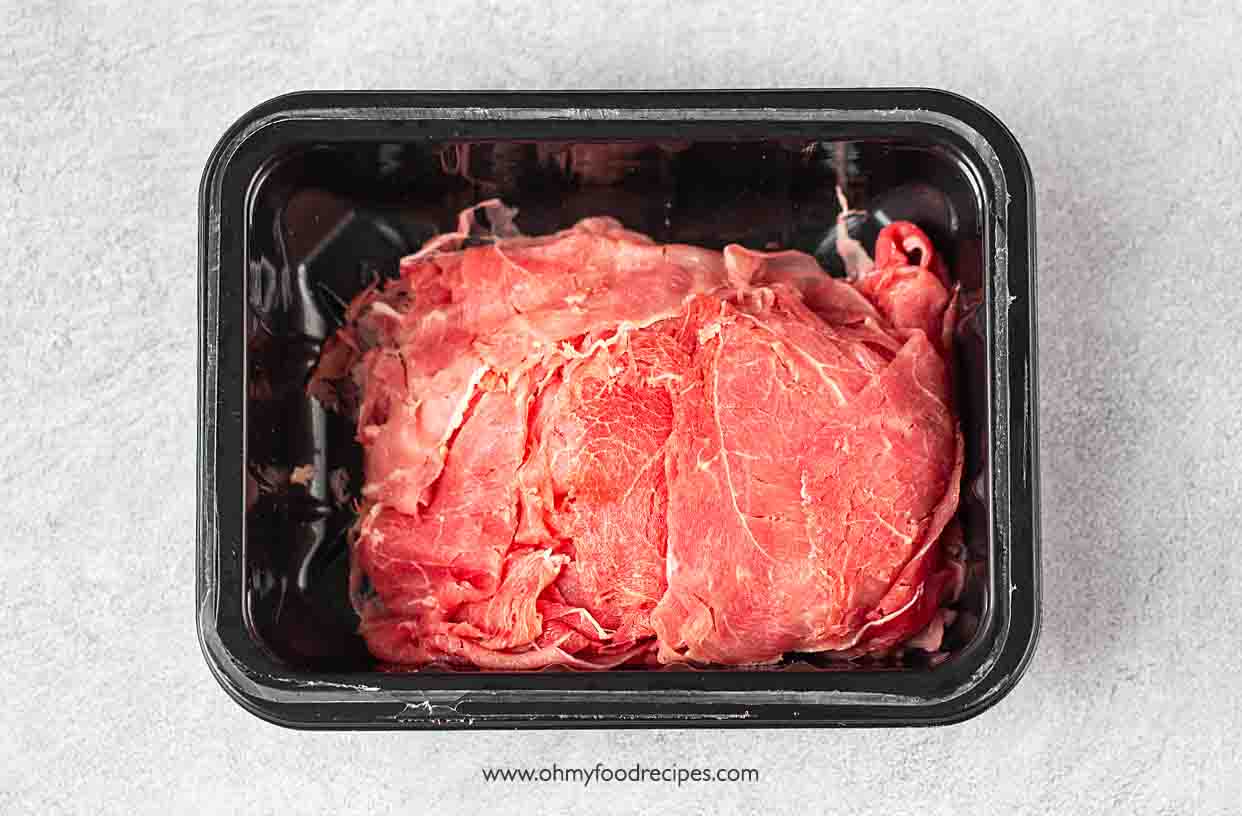
Traditionally, people like to use ribeye or sirloin because they are tender and flavorful. However, you can also use brisket and flank-or even use chicken or pork as alternatives. In this Korean bulgogi beef recipe, I prefer using shaved or thinly sliced beef because it's convenient and requires less preparation.
What do you serve with bulgogi beef?
Bulgogi is commonly served with steamed rice and banchan (Korean side dishes like kimchi, pickled radish, or seasoned spinach). Often, people serve it as lettuce wraps, where you wrap the meat with rice, kimchi, and ssamjang Korean dipping sauce. Some people like to add bulgogi beef into noodles, stews, or hotpots. Personally, I like to add some bulgogi beef to my pho noodle soup.
Can I cook Korean beef bulgogi without a grill?
Absolutely! Traditionally, people like to grill it over charcoal, which gives a smoky aroma. Nowadays, many people cook bulgogi in a pan or skillet, which is easily cooked on the stovetop at home.
What are the ingredients for Korean bulgogi beef?
In this Korean beef bulgogi recipe, the ingredients are beef, green onion, carrot, onion, garlic, ginger, Asian pears, soy sauce, brown sugar, salt, black pepper, sesame oil, and sesame seeds. Sesame seeds are optional. Some people like to add some cooking rice wine to the marinade. If you want, you can add ½ tablespoon of cooking rice wine to the marinade sauce.

Cooking tips for how to make Korean bulgogi beef:
- Slice the beef very thinly or use thin-sliced beef. Partially freeze the beef for 30-45 minutes before slicing. This makes it easier to cut into thin, even strips that cook quickly and stay tender.
- Marinate long enough for flavor. Marinate for at least 15-30 minutes if you use thin-sliced beef. However, overnight gives the best taste and tenderness.
- Don't overcrowd the pan. Cook the beef in small batches over high heat. If the pan is too crowded, the meat will steam instead of searing. I usually separate and cook it 2 times.
- Use high heat for a quick cook. Bulgogi cooks very fast! Stir-fry or grill the beef over medium-high to high heat for a nice char and smoky flavor.
- Serve immediately. Bulgogi tastes best hot, straight off the grill or pan, with rice, lettuce wraps, side dishes (banchan), and ssamjang Korean dipping sauce
Substitution:
Can I make bulgogi without beef?
Yes! Bulgogi can be adapted with pork, chicken, tofu, or even mushrooms for a vegetarian version.
Is bulgogi gluten-free?
It can be if you use gluten-free soy sauce (or tamari). Always check labels if you're cooking for someone with gluten sensitivities.
Can I substitute Asian pears in the bulgogi marinade?
Yes! If you can't find Asian pears, you can use an apple or a little kiwi juice.
What if I don't have sesame oil?
You can use vegetable oil.
Storage:
How long does cooked bulgogi last in the fridge?
Cooked bulgogi can be stored in an airtight container in the refrigerator for up to 3-4 days.
Can I freeze cooked bulgogi?
Yes! Let it cool completely, then freeze in a freezer-safe container or bag for up to 2-3 months. Reheat on the stovetop or microwave until hot.
Can I freeze raw marinated bulgogi?
Definitely, freezing the meat in its marinade is a great make-ahead option. I like to do this for meal prep when I am busy. Store it in a freezer bag (removing excess air) for up to 2-3 months. Thaw in the fridge overnight before cooking.
How to warm up the leftovers?
Put the leftovers of bulgogi in a microwave-safe dish. Cover it with a damp paper towel. Heat in 30-45 second intervals, stirring in between, until hot.
FAQs:
Partially freeze the beef for 30-45 minutes before slicing. This makes it easier to cut into thin, even slices. For convenience, I prefer to buy thin-sliced beef or thin-shaved beef for this recipe.
If you use thin-sliced beef, I usually marinate it for at least 15- 30 minutes. However, if you have time, marinating it overnight in the fridge yields the best results and flavor.
Instructions for how to make Korean bulgogi beef:

Preparation:
1. Wash and cut 4 sticks (1.5 oz) of green onion into strips.

2. Peel, wash, and cut 1 small onion (6 oz) into slices.

3. Then, peel, wash, and cut 1 small carrot (4 oz) into strips.

4. Next, peel and cut 4 small Asian pears (12 oz after peeling). I used my homegrown Asian pears, which are smaller in size. If you use the store-bought Asian pears, you can use 2 medium-sized ones that are around 12 oz after peeling the skin.
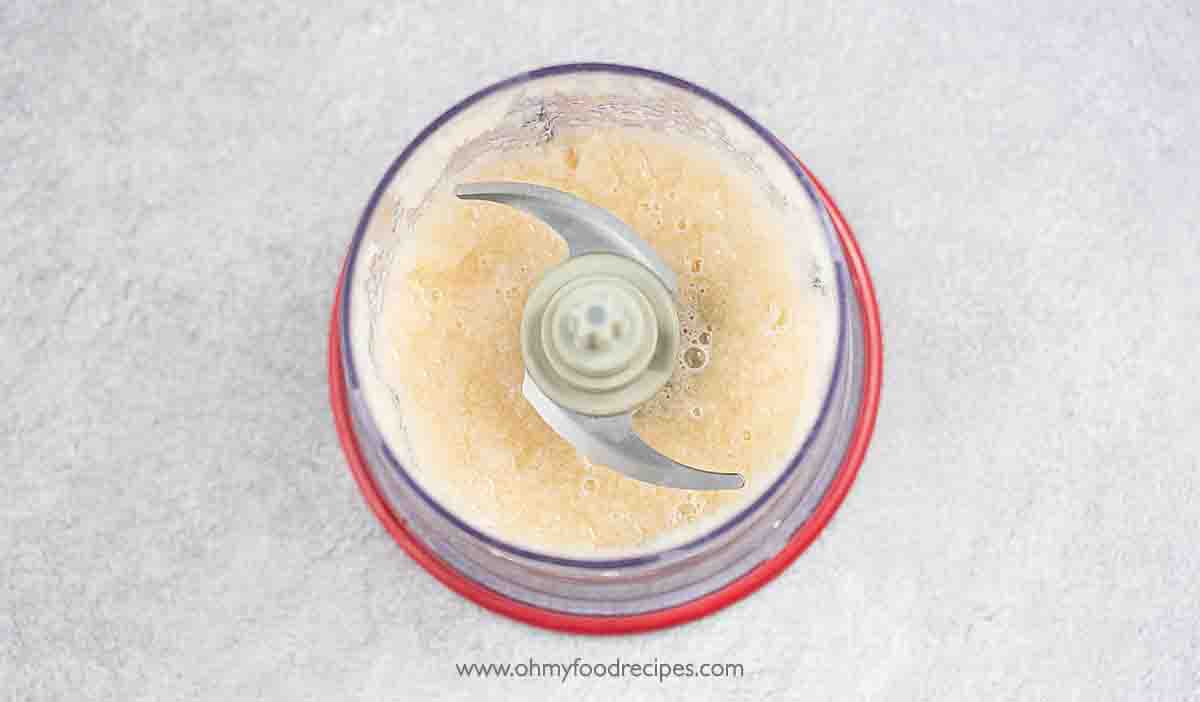
5. Put the peeled and cut Asian pears from step 4 into a chopper and chop them finely.

6. Drain the Asian pears and press them to get the juice. Get ½ cup of fresh Asian pear juice. (You can skip this step if you won't mind the texture.)
Marinate meat:
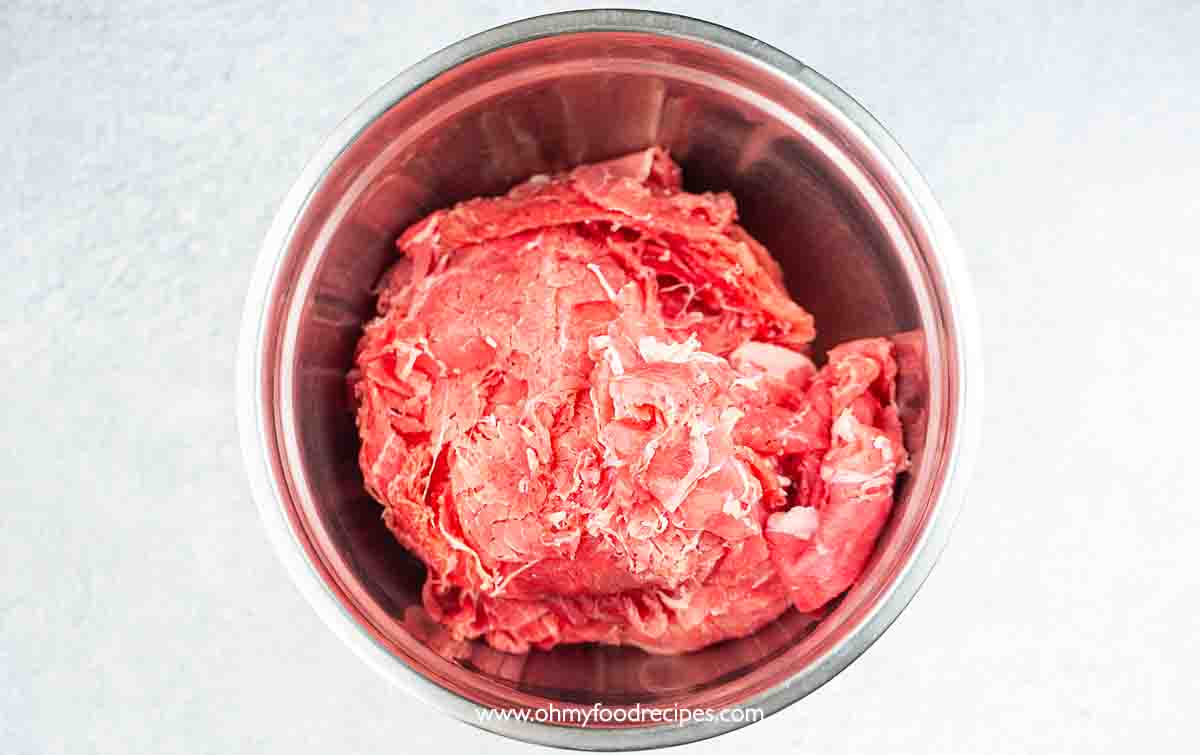
7. The following step is to put the thinly sliced beef into the bowl.

8. Grate 4 cloves of garlic (½ oz).
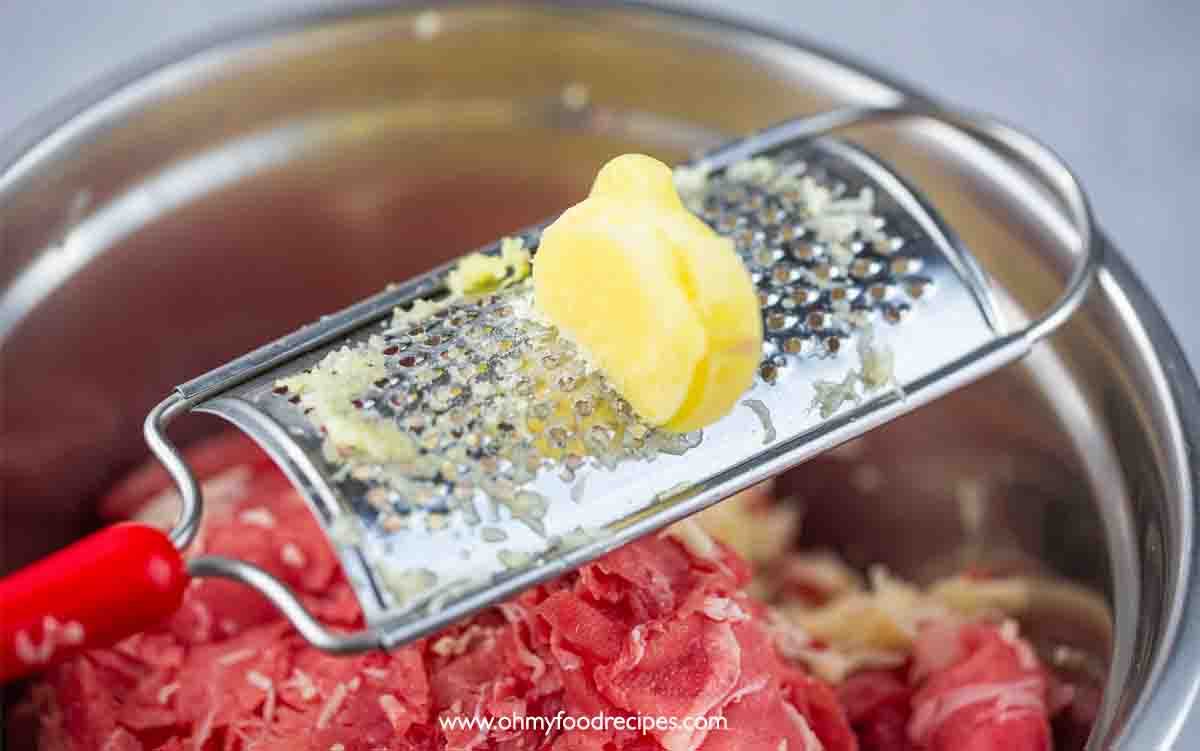
9. After that, grate 3 slices of ginger (½ oz).
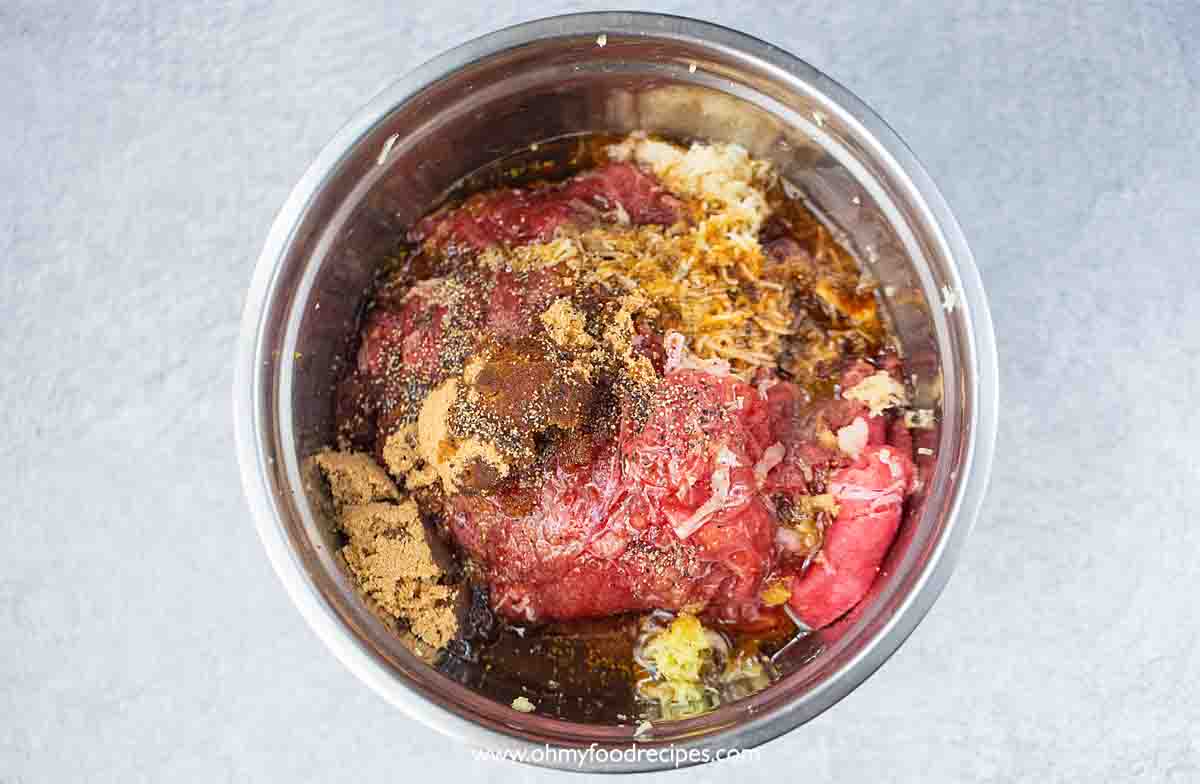
10. Pour ½ cup of fresh Asian pear juice from step 6 into the beef. Then, add 6 tablespoons of soy sauce, 3 tablespoons of brown sugar, ½ teaspoon of salt, ¼ teaspoon of black pepper, and 2 tablespoons of sesame oil.
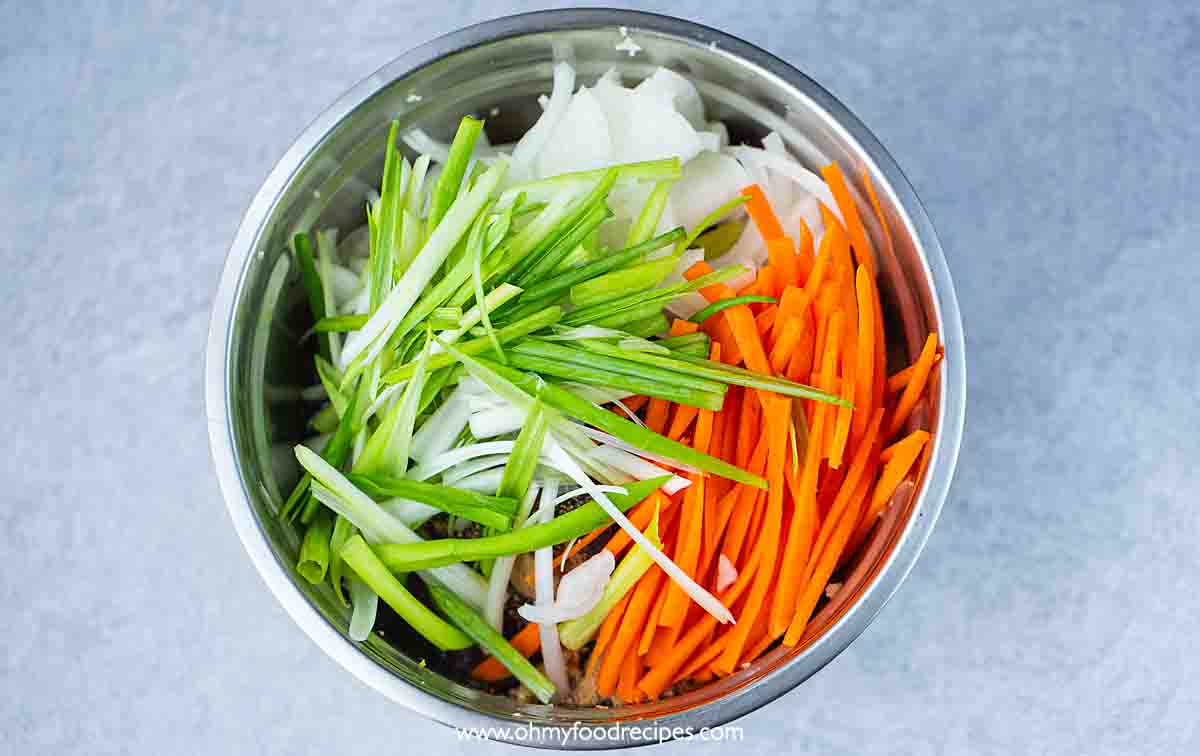
11. Add the cut green onions, onion, and carrot from steps 1-3 into the beef.
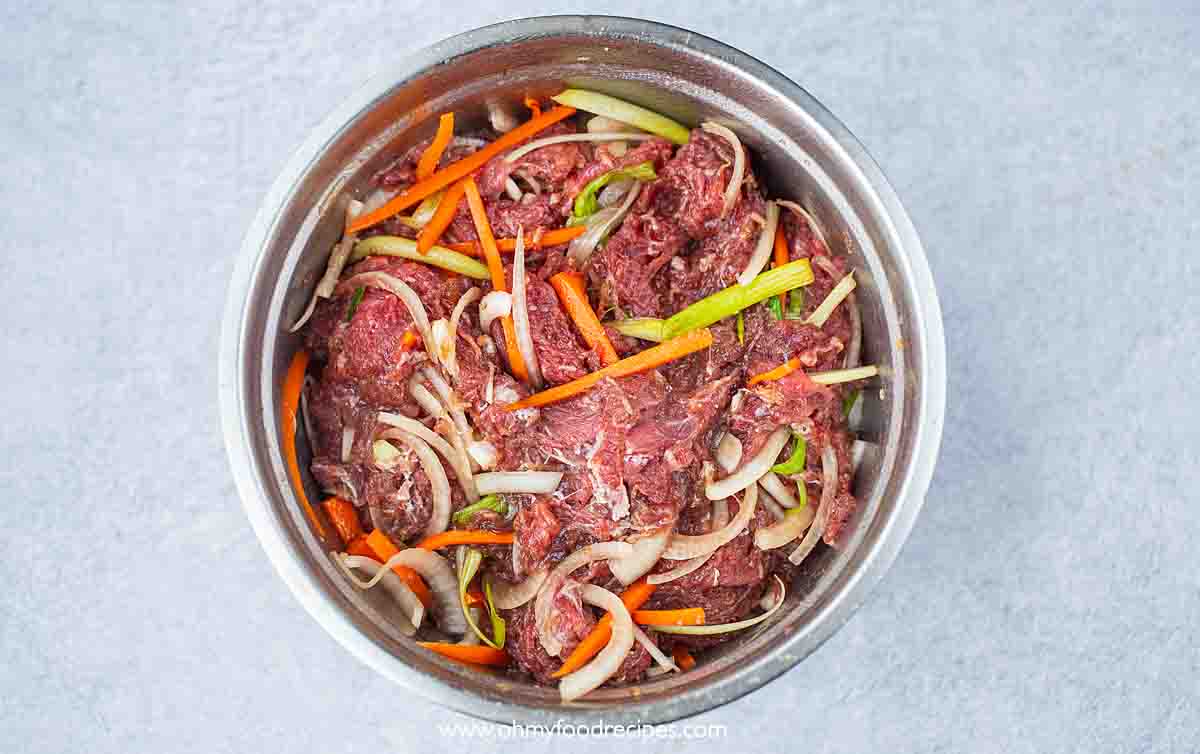
12. Mix it well and let it marinate for at least 15-30 minutes before cooking. The best result is to let it marinate overnight.

Cooking:
13. Heat the skillet or pan, and put some beef into the pan. Pan-fry it, then flip it over until it is cooked. Separate it into 2 times so that it won't be too crowded when cooking the beef.

14. When the beef is done, turn off the fire and add ½ tablespoon of sesame oil and sprinkle ½ teaspoon of sesame seeds. Repeat this for the second batch. Adding sesame seeds is optional. ( Total 1 tablespoon of sesame oil and 1 teaspoon of sesame seeds.)
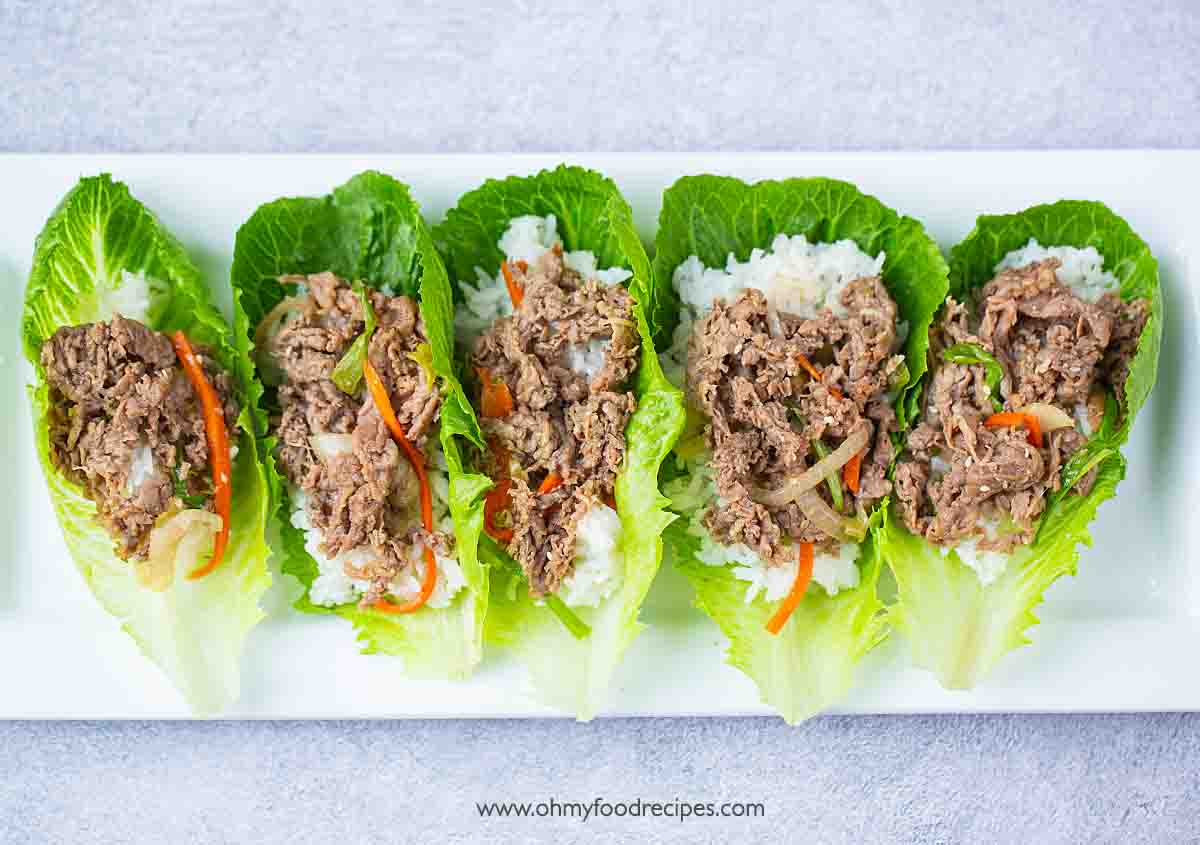
15. For this Korean beef bulgogi recipe, you can serve it as a lettuce wrap with rice, lettuce, beef, and ssamjang Korean dipping sauce.

Enjoy this delicious and simple version of the bulgogi Korean beef recipe! Also, check out these recipes: scallion pancake, Chinese pancake, tom yum kung, coconut bread, roast whole chicken, salt and pepper squid, laksa noodle soup, and Thai chicken satay.
You May Also Like These Recipes:
Subscribe to Oh My Food Recipes to get our new recipes delivered straight to your inbox! Follow along on Facebook, Pinterest, and Instagram for all the latest updates.
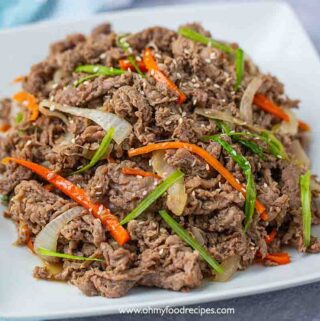
Bulgogi Beef
Equipment
- 1 Skillet or pan
- 1 Chopper
- 1 Strainer
- 1 Grater
Video
Ingredients
- 2 pounds Beef (Thinly sliced beef)
- 4 sticks Green onions 1.5 oz
- 1 small Onion 6 oz
- 1 small Carrot 4 oz
- 4 cloves Garlic ½ oz grated
- 3 slices Ginger ½ oz grated
Marinated sauce:
- 4 small Asian pears (12 oz after peeling, need ½ cup of juice)
- 6 tablespoons Soy sauce
- 3 tablespoons Brown sugar
- ½ teaspoon Salt
- ¼ teaspoon Black pepper
- 2 tablespoons Sesame oil
Topping:
- 1 teaspoon Sesame seeds optional
- 1 tablespoon Sesame oil
Instructions
- Wash and cut 4 sticks (1.5 oz) of green onion into strips.
- Peel, wash, and cut 1 small onion (6 oz) into slices.
- Then, peel, wash, and cut 1 small carrot (4 oz) into strips.
- Next, peel and cut 4 small Asian pears (12 oz after peeling). I used my homegrown Asian pears, which are smaller in size. If you use the store-bought Asian pears, you can use 2 medium-sized ones that are around 12 oz after peeling the skin.
- Put the peeled and cut Asian pears from step 4 into a chopper and chop them finely.
- Drain the Asian pears and press them to get the juice. Get ½ cup of fresh Asian pear juice. (You can skip this step if you won't mind the texture.)
- The following step is to put the thinly sliced beef into the bowl.
- Grate 4 cloves of garlic (½ oz).
- After that, grate 3 slices of ginger (½ oz).
- Pour ½ cup of fresh Asian pear juice from step 6 into the beef. Then, add 6 tablespoons of soy sauce, 3 tablespoons of brown sugar, ½ teaspoon of salt, ¼ teaspoon of black pepper, and 2 tablespoons of sesame oil.
- Add the cut green onions, onion, and carrot from steps 1-3 into the beef.
- Mix it well and let it marinate for at least 15-30 minutes before cooking. The best result is to let it marinate overnight.
- Heat the skillet or pan, and put some beef into the pan. Pan-fry it, then flip it over until it is cooked. Separate it into 2 times so that it won't be too crowded when cooking the beef.
- When the beef is done, turn off the fire and add ½ tablespoon of sesame oil and sprinkle ½ teaspoon of sesame seeds. Repeat this for the second batch. Adding sesame seeds is optional. ( Total 1 tablespoon of sesame oil and 1 teaspoon of sesame seeds.)
- For this Korean beef bulgogi recipe, you can serve it as a lettuce wrap with rice, lettuce, beef, and ssamjang Korean dipping sauce.
Notes
Cooking tips for how to make Korean bulgogi beef:
- Slice the beef very thinly or use thin-sliced beef. Partially freeze the beef for 30-45 minutes before slicing. This makes it easier to cut into thin, even strips that cook quickly and stay tender.
- Marinate long enough for flavor. Marinate for at least 15-30 minutes if you use thin-sliced beef. However, overnight gives the best taste and tenderness.
- Don't overcrowd the pan. Cook the beef in small batches over high heat. If the pan is too crowded, the meat will steam instead of searing. I usually separate and cook it 2 times.
- Use high heat for a quick cook. Bulgogi cooks very fast! Stir-fry or grill the beef over medium-high to high heat for a nice char and smoky flavor.
- Serve immediately. Bulgogi tastes best hot, straight off the grill or pan, with rice, lettuce wraps, side dishes (banchan), and ssamjang Korean dipping sauce.


Linda says
Love this simple and delicious bulgogi beef recipe!