
This California roll recipe shows you how to make fresh, restaurant-quality sushi at home with simple ingredients like imitation crab, avocado, cucumber, and perfectly seasoned sushi rice. Whether you're making sushi for the first time or looking to improve your rolling technique, this easy step-by-step guide will help you create delicious homemade California rolls with confidence.
California rolls are perfect for lunch, dinner, or a fun homemade sushi night. Serve them with a warm bowl of miso soup, crispy pan-fried dumplings, flavorful udon stir fry, or crunchy tonkatsu for a complete Japanese-inspired meal. If you enjoy making sushi at home, be sure to try my inari sushi, gimbap (Korean sushi rolls), salmon sushi cups, and Hawaiian musubi for even more delicious rice-based recipes.
Love Japanese food? Check out these recipes: taiyaki, homemade ramen noodles, teriyaki chicken rice bowl, crispy teriyaki tofu, teriyaki sauce, Japanese milk bread rolls, red bean mochi, beef gyudon bowl, and Japanese chicken curry.

What Is a California Roll?
A California roll is one of the most popular sushi rolls in North America and is often recommended as the perfect introduction to homemade sushi. Unlike traditional Japanese sushi, the California roll is considered a fusion creation widely believed to have been created in North America in the late 1960s or early 1970s. Today, it is enjoyed around the world and is commonly found on sushi restaurant menus.
Also known as California maki, it is a type of uramaki, or inside-out sushi roll, in which the seasoned sushi rice is on the outside, with the nori (dried seaweed) wrapping around the filling. Because of its North American origins, it isn't considered a traditional Japanese sushi roll like inari sushi. Instead, it is a fusion dish, much like my salmon sushi cups and Hawaiian musubi, which combine Japanese-inspired flavors with modern influences.
A classic California roll is made with seasoned sushi rice, nori, imitation crab, avocado, and cucumber. The sushi rice is flavored with rice vinegar, sugar, and salt, giving it its signature sweet-and-tangy taste. Creamy avocado balances the fresh crunch of cucumber, while imitation crab (surimi), made from white fish, provides a mild, slightly sweet flavor. Since the filling is fully cooked, California rolls are a popular choice for anyone new to sushi or for those who prefer to avoid raw seafood.
Many restaurants finish California rolls with white or black sesame seeds, tobiko (flying fish roe), or a drizzle of spicy mayo for extra flavor and texture. In this homemade California roll recipe, I use white sesame seeds because they're easy to find at most grocery stores and add a subtle nutty crunch.
California rolls are traditionally served with soy sauce, pickled ginger, and wasabi. Their mild flavors, colorful appearance, and beginner-friendly ingredients have made them one of the most popular homemade sushi rolls and a favorite choice for sushi lovers of all ages.
I've been making California rolls at home for my family for years, and after experimenting with different brands of imitation crab, sushi rice seasoning, and rolling techniques, I've found that freshly seasoned sushi rice and perfectly ripe avocados consistently produce the best texture and flavor. That's the simple method I use in this recipe, and it creates California rolls that taste just as fresh as those from our favorite sushi restaurants.
Now that you know what makes a California roll unique, let's walk through the ingredients and simple techniques you'll need to make perfect homemade California rolls.
Why You'll Love This Recipe
- beginner friendly
- restaurant quality
- easy ingredients
- family favorite
- cheaper than takeout
- ready in under an hour
What Does a California Roll Taste Like?
California rolls have a mild, fresh, and well-balanced flavor, making them one of the best sushi rolls for beginners. Unlike traditional sushi made with raw fish, a California roll has a creamy, slightly sweet, and savory taste with a satisfying combination of textures.
The creamy avocado adds a rich, buttery texture and a mild, nutty flavor that pairs perfectly with the crisp freshness of cucumber. Imitation crab (surimi), made from white fish, contributes a subtly sweet and savory flavor. In this homemade California roll recipe, I like to mix the imitation crab with a little mayonnaise to create an extra creamy, slightly tangy filling that makes every bite even more flavorful.
Another key ingredient is the seasoned sushi rice. Flavored with rice vinegar, sugar, and salt, it adds a delicate balance of sweetness and tanginess that complements the filling. Although the nori (dried seaweed) is hidden inside the roll, it provides a subtle umami flavor that ties all the ingredients together.
Overall, California rolls are light, refreshing, and easy to enjoy. Their mild flavor, creamy texture, and cooked filling make them an excellent choice for anyone trying sushi for the first time or for those who prefer sushi without raw fish. If you're looking for an easy homemade sushi recipe that's both delicious and approachable, this California roll recipe is a great place to start.
What Is the Difference Between a Japanese Sushi Roll and a California Roll?
The main differences between a traditional Japanese sushi roll and a California roll are the ingredients, preparation style, and presentation. While both use sushi rice and nori (dried seaweed), they have distinct characteristics.
Traditional Japanese sushi rolls, known as maki sushi or makizushi, typically feature ingredients such as raw fish, seafood, vegetables, or egg. Popular examples include Tekka maki (tuna roll) and Sake maki (salmon roll). In a traditional sushi roll, the nori is usually on the outside, with seasoned sushi rice and fillings rolled together using a bamboo mat. The rice is generally on the inside, surrounding the filling.
A California roll, on the other hand, is a North American fusion sushi roll designed with a different approach. Instead of raw fish, it typically uses cooked imitation crab (surimi), avocado, cucumber, and seasoned sushi rice. The signature feature of a California roll is its inside-out style, also called uramaki, where the sushi rice is on the outside, and the nori wraps around the filling.
Because California rolls use cooked seafood and familiar ingredients like creamy avocado, they are often considered a beginner-friendly sushi option. They offer a mild, slightly sweet, and savory taste while introducing many people to the flavors and textures of sushi without raw fish.
What Is the Difference Between Japanese Sushi Rice and Korean Kimbap Rice?
Japanese sushi rice and Korean kimbap rice are very similar because both use short-grain rice with a slightly sticky texture that makes it easy to roll. However, the biggest difference is in the seasoning and flavor profile.
Japanese sushi rice is seasoned with a mixture of rice vinegar, sugar, and salt, giving it a slightly sweet, tangy, and refreshing flavor. This seasoned rice is the foundation of many Japanese sushi rolls, including this California roll recipe.
Korean kimbap rice, on the other hand, is typically seasoned with salt and sesame oil, creating a more savory and nutty flavor. Unlike Japanese sushi, which often highlights the balance between vinegar-seasoned rice and seafood, kimbap usually features a variety of cooked fillings such as vegetables, eggs, meat, or fish cake.
While both Japanese sushi rolls and Korean kimbap use rice and seaweed, the different seasonings give each one its own unique taste and character. If you enjoy Japanese-inspired and Korean-inspired rice rolls, you may also like my gimbap (Korean sushi rolls) recipe for another delicious fusion-style dish.
What Sauces Go Well With California Rolls?
California rolls pair well with a variety of sauces that enhance their mild, creamy, and slightly sweet flavor. The most traditional choice is soy sauce, which adds a savory, salty flavor that complements the seasoned sushi rice, avocado, and imitation crab.
Other popular sauces for California rolls include:
- Spicy mayo - A creamy sauce made with mayonnaise and sriracha that adds a rich texture and a mild spicy kick. It pairs especially well with imitation crab filling.
- Eel sauce (unagi sauce) - A sweet and savory sauce with a thick consistency that adds extra depth and a glossy finish to sushi rolls.
- Ponzu sauce - A citrus-based soy sauce that provides a bright, tangy flavor and a lighter alternative to regular soy sauce.
- Soy sauce with wasabi - A classic sushi dipping combination that adds a salty, spicy kick.
- Soy-based dipping sauces - These can include flavors such as ginger, garlic, sesame, or citrus to create a customized dipping sauce.
For this homemade California roll recipe, I usually serve the rolls with classic soy sauce, but adding a drizzle of spicy mayo or eel sauce is a great way to make them taste more like restaurant-style sushi.
What Are the Ingredients for Homemade California Sushi Rolls?
Making homemade California sushi rolls is easier than you might think. This beginner-friendly California roll recipe uses simple, easy-to-find ingredients from most grocery stores. The classic combination includes seasoned sushi rice, nori, imitation crab, avocado, and cucumber.
For this homemade California roll, I make a creamy crab salad by combining finely chopped imitation crab sticks with mayonnaise. The creamy crab filling pairs perfectly with buttery avocado and seasoned sushi rice, creating the mild, slightly sweet, and savory flavor that California rolls are known for.

California Roll Ingredients:
- Sushi rice - Short-grain Japanese rice seasoned with rice vinegar, sugar, and salt. Properly seasoned sushi rice gives California rolls their signature slightly sweet and tangy flavor while helping the roll hold together.
- Nori (dried seaweed) - Thin sheets of roasted seaweed used to wrap the filling and add a subtle savory, umami flavor.
- Imitation crab sticks (surimi) - A cooked seafood product made from white fish that provides a mild, slightly sweet crab-like flavor. It is a popular ingredient in California rolls because it does not contain raw fish.
- Mayonnaise - Mixed with imitation crab to create a creamy crab salad filling. Japanese mayonnaise can add richer flavor, but regular mayonnaise works well too.
- Avocado - Adds a creamy, buttery texture and balances the savory crab filling.
- Cucumber - Optional but recommended for adding freshness and a crisp texture.
- Sesame seeds - Optional toasted white or black sesame seeds add a nutty flavor and a beautiful finishing touch.
Some California rolls are also topped with tobiko (flying fish roe), spicy mayo, or eel sauce for extra flavor. However, this homemade version keeps the ingredients simple and approachable while still delivering restaurant-quality sushi at home.
What Is Imitation Crab Stick?
Imitation crab sticks, also called imitation crab meat or kanikama in Japan, are a popular ingredient in California rolls and other sushi recipes. Despite the name, imitation crab does not contain actual crab meat. Instead, it is made from surimi, a seafood paste created from finely ground white fish, such as pollock, combined with starch, seasonings, and other ingredients to create a texture and flavor similar to crab.
The fish paste is shaped into sticks or flakes that resemble crab leg meat. Many brands add crab flavoring to enhance the seafood flavor, and the sticks are often coated in a reddish-orange hue to mimic the appearance of real crab.
The flavor and texture of imitation crab can vary by brand. Some varieties are sweeter, softer, or more seasoned than others. If your imitation crab sticks taste mild, you can add a small pinch of salt or mix them with mayonnaise and seasonings to create a more flavorful crab salad filling.
For this homemade California roll recipe, I usually buy imitation crab sticks from Asian grocery stores because I find they often have better texture and flavor than some options at regular supermarkets. However, many grocery stores now carry good-quality imitation crab that works well for making sushi at home.
Best Rice to Use for California Rolls
The best rice to use for California rolls is Japanese short-grain sushi rice because it has the ideal sticky texture needed to hold the sushi roll together. Unlike long-grain rice, which stays fluffy and separate after cooking, short-grain rice becomes soft, slightly sticky, and easy to shape when rolled with nori and fillings.
Japanese sushi rice is a short, plump grain that is traditionally seasoned with rice vinegar, sugar, and salt. This seasoning gives California rolls their signature slightly sweet and tangy flavor while complementing ingredients like imitation crab, avocado, and cucumber.
For homemade sushi in the United States, I often use Calrose rice, a medium-grain variety that is widely available in grocery stores. It has a texture similar to Japanese sushi rice and works especially well for making California rolls and kimbap (Korean sushi rolls).
Avoid using long-grain varieties such as jasmine rice or basmati rice for California rolls. These types of rice do not become sticky enough, making the sushi rolls more likely to fall apart.
Can I Use Store-Bought Sushi Rice Vinegar?
Yes, you can use store-bought sushi rice vinegar (also called seasoned rice vinegar) to make California rolls. It is a convenient option and works well when you want to save time. However, keep in mind that different brands can vary in sweetness, saltiness, and acidity, so it is best to adjust the amount according to your personal taste.
For this homemade California roll recipe, I prefer making my own sushi rice vinegar because it is simple and only requires three basic pantry ingredients: rice vinegar, sugar, and salt. Making it from scratch lets you easily adjust the flavor balance and create sushi rice that suits your preferences.
If you make extra sushi rice vinegar, store it in a clean glass jar and save it for your next homemade sushi night. Before seasoning your rice, always taste and adjust the amount of sushi vinegar as needed, as the flavor can vary with the type of rice and your personal preference.
How to Pick the Perfect Avocado for California Rolls
Choosing the right avocado is important for making delicious California rolls. The best avocado should be creamy, smooth, and ripe enough to slice easily without being mushy.
For the best California rolls, choose Hass avocados because their creamy texture and rich flavor pair especially well with imitation crab and sushi rice. Their smooth texture makes them easy to slice and helps create the classic creamy bite that California rolls are known for.
When buying avocados, I usually choose firm, green avocados that are not overly soft. I avoid pressing them too hard because bruising can damage the fruit's interior. Instead, I let them ripen naturally on the countertop for 2-3 days until the skin changes from bright green to a darker brownish-green color and the avocado feels slightly soft when gently squeezed.
If you need to speed up the ripening process, place the avocado in a paper bag with an apple. The apple releases natural ethylene gas, which helps the avocado ripen faster, usually within 1-2 days.
For California rolls, look for avocados that are ripe but still firm enough to slice. Overripe avocados can become too soft, making the sushi roll messy, while underripe avocados lack the creamy texture that makes California rolls so delicious.
California Roll Ingredient Substitutions:
One of the best things about making California rolls at home is that the ingredients are easy to customize. If you don't have a specific ingredient or want to adjust the recipe to your preference, try these simple substitutions.
Imitation Crab Substitute
Imitation crab (surimi) is the classic filling for California rolls, but you can substitute it with other cooked seafood. Try using real cooked crab meat, shrimp, salmon, or even cooked tuna. Keep in mind that changing the filling will slightly alter the roll's flavor and texture.
Here are some California Roll Variations:
- Real crab California Roll
- Spicy California Roll
- Shrimp California Roll
- Tempura California Roll
- Cream Cheese California Roll
- Brown Rice California Roll
Avocado Substitute
Avocado provides the creamy texture that makes California rolls unique. If you don't have avocado, you can substitute it with cucumber, cream cheese, or other creamy vegetables. However, the flavor will be different because avocado adds a mild, buttery taste.
Sushi Rice Substitute
For the best texture, use Japanese short-grain sushi rice or Calrose rice. Avoid long-grain rice, such as jasmine or basmati, because it does not become sticky enough to roll. If you cannot find sushi rice, look for another short-grain rice that becomes slightly sticky when cooked.
Nori Substitute
Nori (dried seaweed) gives California rolls their classic sushi flavor, but if you are not a fan of seaweed, you can make an inside-out roll with the rice and fillings on the outside or use thinly sliced cucumber wraps as an alternative.
Mayonnaise Substitute
Mayonnaise helps create the creamy crab salad filling. Japanese mayonnaise provides a richer, slightly tangy flavor, but regular mayonnaise works well too. You can also use Greek yogurt for a lighter option, although the flavor and texture will be different.
Sesame Seed Substitute
Sesame seeds add a nutty flavor and a beautiful finishing touch. You can use toasted sesame seeds, black sesame seeds, or leave them out completely if you have allergies or prefer a simpler California roll.
Storage:
How to Store California Rolls and Leftovers?
California rolls are best enjoyed fresh on the same day they are made. However, if you have leftovers, you can store them properly to enjoy later.
Can You Refrigerate California Rolls Overnight?
Yes, you can refrigerate California rolls overnight. However, the texture will not be exactly the same as freshly made sushi. When refrigerated, the sushi rice becomes firmer and loses some of its soft, slightly sticky texture. The nori may also become softer as it absorbs moisture from the rice and filling.
For the best taste and texture, I recommend eating homemade California rolls the same day they are prepared. If you need to store leftovers, wrap the rolls tightly with plastic wrap and place them in an airtight container in the refrigerator.
How Long Can California Rolls Sit Out at Room Temperature?
California rolls should not be left at room temperature for more than 1-2 hours. Because California rolls contain cooked seafood, mayonnaise, and other perishable ingredients, they should be refrigerated if not eaten right away.
When I make California rolls ahead of time, I usually wrap them tightly with plastic wrap to help keep the sushi rice from drying out. If there are leftovers, I transfer them to the refrigerator as soon as possible.
Before serving refrigerated California rolls, let them sit at room temperature for a few minutes to slightly soften the rice. Keep in mind that the texture will always be best when the rolls are freshly made.
Cooking tips for how to Make Homemade California Rolls (Step-by-Step):
Making homemade California rolls is easier than you might think. The key to making restaurant-quality sushi at home is using properly cooked sushi rice, balancing the filling, and using a gentle rolling technique. Follow these step-by-step instructions to create fresh California rolls with the perfect texture and flavor.
Prepare the Sushi Rice:
The foundation of a great California roll is properly cooked and seasoned sushi rice. For the best results, use Japanese short-grain sushi rice because it has the ideal sticky texture to hold the roll together.
I like to use an Instant Pot to cook sushi rice because it is convenient and consistently produces soft, evenly cooked rice.
- Wash and drain the rice thoroughly.
- Add the washed rice and the appropriate amount of water to the Instant Pot.
- Level the rice evenly and make sure all the rice is covered with water.
- Close the lid, seal the steam release valve, and cook on high pressure for 6 minutes. Allow the pressure to release naturally.
While the rice is cooking, prepare the sushi rice vinegar. I prefer making my own because it is simple and only requires three pantry ingredients: rice vinegar, sugar, and salt.
Add the sugar, salt, and rice vinegar to a small pot. Heat over low heat and stir until the sugar and salt completely dissolve. Let the mixture cool before using.
For this California roll recipe, I usually use about ⅓ cup of sushi rice vinegar, but the amount can be adjusted according to your taste. If you use store-bought sushi rice vinegar, add it gradually because different brands vary in sweetness and acidity.
Once the rice is cooked, gently mix the sushi rice vinegar into the hot rice a little at a time. Allow the seasoned sushi rice to cool to room temperature before assembling the California rolls.
Make the California Roll Filling:
For the filling, I like to make a simple and creamy imitation crab salad.
- Cut imitation crab sticks into shorter pieces.
- Place them in a food chopper and pulse until finely chopped.
- Transfer the chopped imitation crab to a bowl and mix with mayonnaise until well combined.
- Peel and slice the avocado into thin, even pieces.
The creamy crab salad and buttery avocado create the classic California roll flavor and texture.
Roll the California Rolls:
A standard nori sheet is usually about 8 x 7.5 inches. Personally, I like to trim about 1.5-2 inches from the height of the nori sheet because it creates a better proportion between the rice and filling. After trimming, the nori sheet is approximately 8 x 6 inches.
However, trimming the nori is completely optional. You can use the full sheet if you prefer a larger sushi roll.
To make rolling easier, I like to wrap my bamboo sushi mat with plastic wrap. This keeps the mat clean and prevents rice from sticking, making cleanup much easier.
Before handling the sushi rice, lightly wet your hands with water. This prevents the sticky rice from sticking to your fingers as you spread it over the nori.
Spread an even layer of sushi rice over the nori, then place the crab salad and avocado slices in the center. Use the bamboo mat to gently roll the sushi away from you while lightly pressing and shaping the roll.
Avoid pressing too firmly, as the filling may squeeze out of the sides.
Cut the California Rolls:
For clean and beautiful sushi slices, use a sharp knife. A dull knife can crush the roll and make the rice stick.
Before each cut, wipe the knife blade with a damp paper towel or wet cloth. Keeping the knife slightly moist helps it glide through the sushi roll and creates neat, even slices.
Serve your homemade California rolls immediately with soy sauce, pickled ginger, and wasabi for the best flavor and texture.
Expert Tips for Making Perfect California Rolls
These simple tips will help you make homemade California rolls that look and taste like restaurant-quality sushi.
- Use freshly cooked sushi rice. Freshly cooked and properly seasoned sushi rice has the best texture for rolling. Avoid using cold rice from the refrigerator because it becomes hard and loses its sticky texture.
- Keep a bowl of water nearby. Lightly wet your hands before handling sushi rice to prevent it from sticking to your fingers as you spread it on the nori.
- Cover the sushi rice while assembling. If you are making multiple rolls, keep the cooked sushi rice covered with a damp towel or plastic wrap to prevent it from drying out.
- Do not overfill the sushi roll. Too much filling can make the roll difficult to close and may cause ingredients to squeeze out as you roll.
- Use a sharp, slightly wet knife. Wipe the knife with a damp paper towel between cuts to create clean slices without crushing the California roll.
- Serve California rolls fresh. Homemade sushi has the best texture and flavor when enjoyed soon after making it. Refrigerating sushi rice can make it firmer and less enjoyable.
Common Mistakes When Making California Rolls
Why Is My California Roll Falling Apart?
California rolls usually fall apart because the rice, filling, or rolling technique needs adjustment. Here are some common reasons:
- Too much filling: Overstuffing the roll makes it difficult to close and can cause the ingredients to spill out.
- Rice is not sticky enough: Use short-grain sushi rice or Calrose rice, and season it properly so the roll holds its shape.
- Rice is too dry or cold: Freshly cooked and seasoned sushi rice works best. Refrigerated rice becomes harder and does not stick together as well.
- Not pressing the roll gently enough: Use a bamboo mat to shape the roll while applying light, even pressure.
- Using a dull knife: A sharp knife helps create clean slices without crushing the roll.
For easier rolling, keep a small bowl of water nearby to wet your hands before handling sushi rice. This prevents the rice from sticking and helps you create a smoother California roll.
1. Using warm rice
Warm rice can make the nori soggy and cause the California roll to fall apart. Let your sushi rice cool to room temperature before assembling the rolls for the best texture.
2. Adding too much filling
A common mistake is overfilling the roll with crab, avocado, and cucumber. Too much filling makes it difficult to roll tightly and can cause the sushi to burst when sliced.
3. Not spreading the rice evenly
Spread a thin, even layer of sushi rice across the nori. A thick layer of rice can overpower the filling and make the roll difficult to shape.
4. Not draining the imitation crab mixture
If you mix imitation crab with mayonnaise, avoid adding too much mayo or leaving excess moisture. A wet filling can make the nori soft and cause the roll to break apart.
5. Cutting the roll with a dull knife
A dull knife can crush the roll rather than slice through it cleanly. Use a sharp knife and lightly wet the blade between cuts for neat slices.
6. Rolling too loosely
Apply gentle but firm pressure when using the bamboo mat. A loose roll will fall apart when sliced or dipped in soy sauce.
7. Not letting the sushi rice stick properly
If the rice does not stick to the nori, it may be too dry or not prepared correctly. Use properly cooked short-grain sushi rice for the best results.
FAQs:
Yes, you can make California rolls ahead of time, but they are best enjoyed fresh. If you need to prepare them in advance, I recommend making them only a few hours before serving and storing them properly in the refrigerator.
Keep the rolls tightly wrapped with plastic wrap or stored in an airtight container to prevent the sushi rice from drying out. However, avoid making them too far in advance, as refrigerated sushi rice becomes firmer and the nori may soften as it absorbs moisture from the rice and filling.
For the best texture and flavor, prepare the sushi rice and filling ahead of time, then assemble and roll the California rolls shortly before serving.
I do not recommend freezing California rolls. Freezing and thawing can change the texture of the sushi rice, avocado, and nori. The avocado may become watery or discolored, while the rice can become hard and lose its soft, sticky texture.
If you want to save time, it is better to prepare the individual ingredients in advance. You can make the crab salad, cook the sushi rice, and prepare the fillings in advance, then assemble fresh California rolls when you are ready to eat.
No, the crab in a traditional California roll is not raw. Most California rolls use imitation crab (surimi), which is made from cooked white fish and shaped to resemble crab meat. Some variations use real crab, but it is typically cooked before being added to the sushi roll.
In this California roll recipe, I use imitation crab mixed with mayonnaise to create a creamy crab salad filling with a mild, slightly sweet, and savory flavor.
Yes, you can use real crab instead of imitation crab in a California roll. Cooked crab meat, such as lump crab or snow crab, can create a more delicate and naturally sweet seafood flavor. Keep in mind that real crab is usually more expensive and has a softer texture compared with imitation crab.
Traditional California rolls are not vegetarian because they usually contain imitation crab, which is made from fish. However, you can easily make a vegetarian California roll by replacing the crab with ingredients like cucumber, avocado, carrots, or other plant-based fillings.
Instructions for how to make homemade California rolls:

How to make sushi rice:
1. Put 2 cups of Japanese rice into a bowl and add some water; wash and rub the rice until the water turns milky. Then drain the water and rinse the rice 2-3 times.

2. After that, drain the rice well. (You can use a strainer.)

3. Next, put the washed and drained rice into the Instant Pot pressure cooker.

4. Pour 2 cups of water into the Instant Pot and level the rice. Make sure the rice is covered by water. Close the lid and vent. Press the manual button, set the time to 6 minutes at high pressure, then release the pressure naturally.

Sushi rice vinegar:
5. In the meantime, put ½ cup of sugar, ½ cup of vinegar, and 1 teaspoon of salt into a pot.

6. Turn on a small fire and keep stirring until sugar and salt dissolve. Let it cool off. In this recipe, only use ⅓ cup of the sushi rice vinegar. Pour the rest of it into a glass jar and refrigerate for next time. (The sushi rice vinegar can be stored in the refrigerator for up to 6 months.)

7. When the rice is done, scoop it out and put it into a mixing bowl.

Seasoning rice:
8. Slowly add ⅓ cup of sushi rice vinegar from step 6 into the hot cooked rice and mix it well. Then, let it cool down before wrapping.

9. Wrap the bamboo sushi mat with a plastic wrap. This can keep the bamboo mat clean and easier to clean.

Filling:
10. Cut 11 long imitation crab sticks into shorter pieces. (It is around 14oz.)

11. After, put the cut imitation crab sticks into a chopper. Chop until they're small pieces.

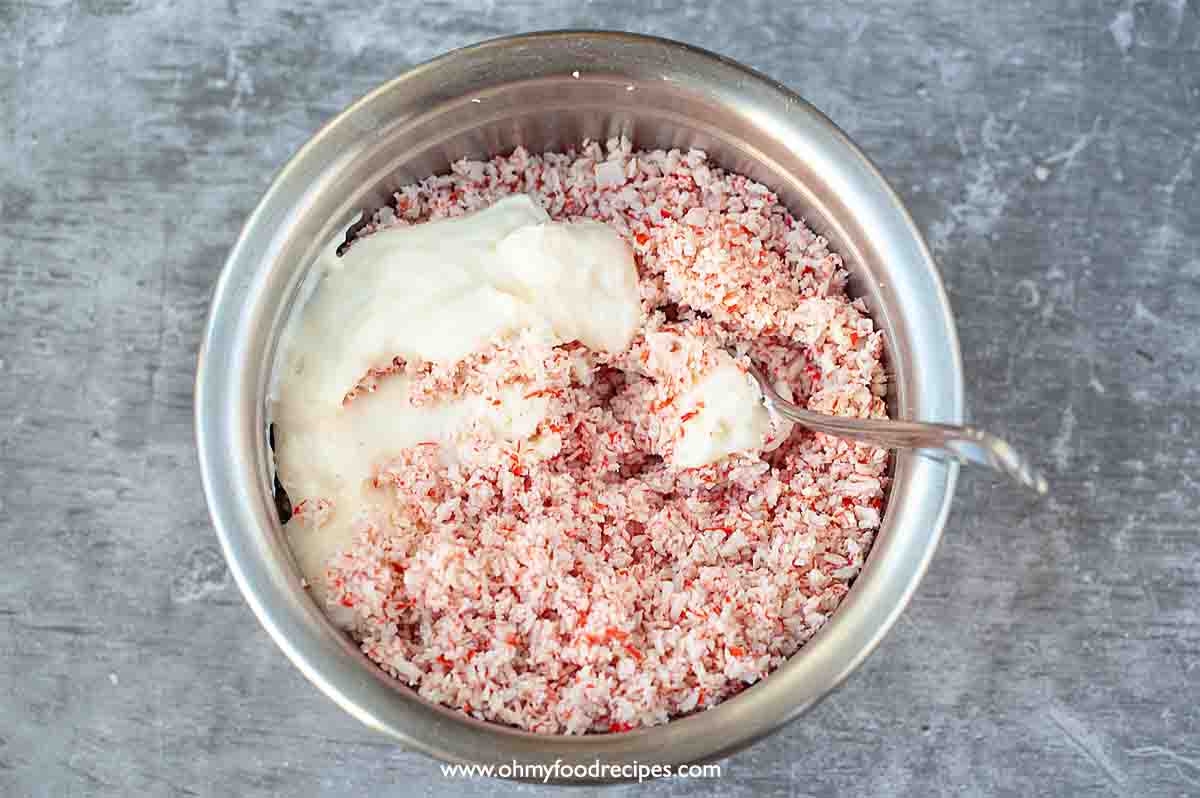
12. The following step, put the chopped crab sticks into a bowl and add ½ cup of mayonnaise. Mix it well.
Sliced avocados:
13. Peel and slice 2 large ripe avocados.

14. A regular seaweed sheet is 8 inches x 7.5 inches. Personally, I prefer to cut out 1.5-2 inches (height) of the nori because when you wrap the sushi rolls, it will look better. Therefore, the size of the nori sheet is around 8 inches x 6 inches. However, you don't have to cut the seaweed sheets. This is optional.

Wrapping sushi:
15. Take a scoop of the seasoned rice from step 8 and spread it on the nori. (Wet your hands a little before placing the sushi rice on the nori, so it doesn't stick to your hands as you spread it on the seaweed.)

16. Flip the nori with rice. Now, the rice faces the bamboo mat, with nori on top.
17. Scoop 3 big tablespoons of crab salad from step 12. And put some sliced avocado.


18. Roll up the nori with the bamboo mat. Press it slightly and shape the roll. (Remember, don't press too hard because the filling will come out the ends.) See the video below the recipe card for details.

Cutting sushi rolls:
19. Sprinkle some toasted sesame seeds (black or white) or roe. This is optional as well. Then, cut the rolls into pieces. (Sharpen your knife. Use a wet paper towel to wipe the knife each time you cut the sushi rolls. This can help you cut the sushi better.)

Enjoy this simple, delicious, and easy homemade California sushi roll recipe! Also, check out these recipes: pad Thai noodles, Korean glass noodles, orange chicken, salt & pepper squid, baked salmon, Asian shaved ice, hot & sour soup, and sesame oil chicken rice.
Other Japanese Recipes You'll Love
If you enjoyed making this California roll at home, try these other Japanese-inspired recipes for your next meal:
- Taiyaki - A popular Japanese fish-shaped cake filled with sweet red bean paste, custard, taro, or other delicious fillings. It's a fun dessert to enjoy after a homemade sushi dinner.
- Tonkatsu - A crispy, Japanese-breaded pork cutlet served with a savory tonkatsu sauce. This classic comfort food is easy to make at home.
- Gyudon (Japanese Beef Bowl) - A quick and flavorful Japanese rice bowl topped with thinly sliced beef and onions simmered in a sweet and savory sauce.
- Japanese Chicken Curry - A hearty Japanese curry featuring tender chicken, vegetables, and a rich sauce, served over steamed rice.
Subscribe to Oh My Food Recipes to get our new recipes delivered straight to your inbox! Follow along on Facebook, Pinterest, and Instagram for all the latest updates.

California Rolls
Equipment
- 1 Instant pot pressure cooker or rice cooker
- 1 Pot
- 1 Bamboo sushi mat
Video
Ingredients
- 2 cups Japanese rice
- 2 cups Water
- 2 large Avocados
- 5-6 sheets Nori/ seaweed sheets
Rice Vinegar Seasoning: (Only use ⅓ cup)
- ½ cup Vinegar
- ½ cup Sugar
- 1 teaspoon Salt
Crab Salad:
- 11 long one Imitation crab sticks (Around 14oz)
- ½ cup Mayonnaise
Optional
- 1 tablespoon Roasted sesame seeds
Instructions
- Put 2 cups of Japanese rice into a bowl and add some water; wash and rub the rice until the water turns milky. Then drain the water and rinse the rice 2-3 times.
- After that, drain the rice well. (You can use a strainer.)
- Next, put the washed and drained rice into the Instant Pot pressure cooker.
- Pour 2 cups of water into the Instant Pot and level the rice. Make sure the rice is covered by water. Close the lid and vent. Press the manual button, set the time to 6 minutes at high pressure, then release the pressure naturally.
- In the meantime, put ½ cup of sugar, ½ cup of vinegar, and 1 teaspoon of salt into a pot.
- Turn on a small fire and keep stirring until sugar and salt dissolve. Let it cool off. In this recipe, only use ⅓ cup of the sushi rice vinegar. Pour the rest of it into a glass jar and refrigerate for next time. (The sushi rice vinegar can be stored in the refrigerator for up to 6 months.)
- When the rice is done, scoop it out and put it into a mixing bowl.
- Slowly add ⅓ cup of sushi rice vinegar from step 6 into the hot cooked rice and mix it well. Then, let it cool down before wrapping.
- Wrap the bamboo sushi mat with a plastic wrap. This can keep the bamboo mat clean and easier to clean.
- Cut 11 long imitation crab sticks into shorter pieces. (It is around 14oz.)
- After, put the cut imitation crab sticks into a chopper. Chop until they're small pieces.
- The following step, put the chopped crab sticks into a bowl and add ½ cup of mayonnaise. Mix it well.
- Peel and slice 2 large ripe avocados.
- A regular seaweed sheet is 8 inches x 7.5 inches. Personally, I prefer to cut out 1.5-2 inches (height) of the nori because when you wrap the sushi rolls, it will look better. Therefore, the size of the nori sheet is around 8 inches x 6 inches. However, you don't have to cut the seaweed sheets. This is optional.
- Take a scoop of the seasoned rice from step 8 and spread it on the nori. (Wet your hands a little before placing the sushi rice on the nori, so it doesn't stick to your hands as you spread it on the seaweed.)
- Flip the nori with rice. Now, the rice faces the bamboo mat, with nori on top.
- Scoop 3 big tablespoons of crab salad from step 12. And put some sliced avocado.
- Roll up the nori with the bamboo mat. Press it slightly and shape the roll. (Remember, don't press too hard because the filling will come out the ends.) See the video below the recipe card for details.
- Sprinkle some toasted sesame seeds (black or white) or roe. This is optional as well. Then, cut the rolls into pieces. (Sharpen your knife. Use a wet paper towel to wipe the knife each time you cut the sushi rolls. This can help you cut the sushi better.)
Notes
Cooking tips for how to Make Homemade California Rolls (Step-by-Step)
Making homemade California rolls is easier than you might think. The key to making restaurant-quality sushi at home is using properly cooked sushi rice, balancing the filling, and using a gentle rolling technique. Follow these step-by-step instructions to create fresh California rolls with the perfect texture and flavor.Prepare the Sushi Rice
The foundation of a great California roll is properly cooked and seasoned sushi rice. For the best results, use Japanese short-grain sushi rice because it has the ideal sticky texture to hold the roll together. I like to use an Instant Pot to cook sushi rice because it is convenient and consistently produces soft, evenly cooked rice.- Wash and drain the rice thoroughly.
- Add the washed rice and the appropriate amount of water to the Instant Pot.
- Level the rice evenly and make sure all the rice is covered with water.
- Close the lid, seal the steam release valve, and cook on high pressure for 6 minutes. Allow the pressure to release naturally.
Make the California Roll Filling
For the filling, I like to make a simple and creamy imitation crab salad.- Cut imitation crab sticks into shorter pieces.
- Place them in a food chopper and pulse until finely chopped.
- Transfer the chopped imitation crab to a bowl and mix with mayonnaise until well combined.
- Peel and slice the avocado into thin, even pieces.


Leave a Reply