
This easy kimbap recipe features sesame-seasoned rice, savory marinated beef, tender egg strips, spinach, carrots, and crunchy yellow-pickled radish, all wrapped in roasted seaweed. Also spelled gimbap (김밥), kimbap is a popular Korean rice roll known for its colorful fillings, balanced textures, and convenient, portable format.
I love using a variety of colorful ingredients because they make these Korean seaweed rice rolls especially appealing to children and adults alike. In this step-by-step recipe, you'll learn how to season the rice, prepare each filling, roll the kimbap tightly, and slice it into neat, bite-sized pieces. Follow the detailed photos and video for helpful techniques and troubleshooting tips, then serve your homemade kimbap for lunch, picnics, packed meals, or a simple family dinner.
You may also enjoy exploring other portable rice-based recipes, including California rolls, inari sushi, salmon sushi cups, and Hawaiian musubi. Although these dishes come from different culinary traditions and use different preparation methods, they share kimbap's colorful presentation, convenient serving style, and satisfying combination of rice and flavorful fillings.
Like Korean food? Looking for more Korean dinner night ideas? Check out these homemade kimchi, kimchi fried rice, kimchi tofu soup, Korean japchae glass noodles, Korean strawberry milk, bulgogi, ssamjang Korean dipping sauce, jajangmyeon, tteokbokki, and ginseng chicken soup recipes as well.

What Is Kimbap (김밥) or Gimbap?
Kimbap, also spelled gimbap, is a Korean seaweed rice roll made with seasoned rice and a variety of fillings, then sliced into bite-sized pieces. Its name combines gim (김), meaning seaweed, and bap (밥), meaning cooked rice. Both spellings refer to the same dish.
Common kimbap fillings include egg strips, spinach, carrots, yellow pickled radish (danmuji), and proteins such as cooked beef, ham, or imitation crab. In this kimbap recipe, I use marinated beef, eggs, spinach, carrots, and danmuji for a combination of savory flavor, tender vegetables, and tangy crunch.
Although sometimes described as "Korean sushi," kimbap is a distinct Korean dish. One key difference is the rice seasoning: kimbap rice is typically mixed with sesame oil and salt, while Japanese sushi rice is seasoned with vinegar, sugar, and salt.
Kimbap is enjoyed for breakfast, lunch, or dinner and is a popular takeout option in Korea. Its compact rolls and easy-to-share slices make it a favorite for packed lunches, picnics, and outdoor gatherings.
What Does Kimbap Taste Like?
Kimbap tastes savory and nutty, with a little sweetness and a mix of tender and crunchy textures. Sesame oil gives the rice a fragrant, nutty flavor, while the seaweed adds a mild ocean-like taste. The flavor varies depending on the fillings.
In this beef kimbap recipe, marinated beef adds savory flavor and a touch of sweetness, while eggs provide a mild, tender bite. Carrots and spinach balance the richer fillings, and yellow pickled radish adds a sweet, tangy crunch. This version is not spicy, making it a good option for those who prefer milder flavors.
Why You'll Love This Kimbap Recipe
- Savory flavor with a satisfying crunch. Marinated beef, sesame-seasoned rice, and tender egg strips pair with vegetables and tangy, crunchy yellow pickled radish.
- Step-by-step photos and video. Follow along as I prepare the fillings and assemble the rolls, with visual guidance to help you make kimbap at home.
- Colorful ingredients in every bite. Beef, eggs, spinach, and carrots create an inviting combination of colors and textures. I love choosing colorful fillings to make the rolls appealing to kids, too.
- Easy to serve and share. Slice the rolls into bite-sized pieces for a family meal or pack them in an insulated lunch bag with ice packs for an outing.
Kimbap vs. Sushi
The main difference between kimbap and sushi is the rice seasoning. Korean kimbap typically uses rice seasoned with sesame oil and salt, giving it a nutty, savory flavor. Japanese sushi uses vinegared rice, usually seasoned with sugar and salt for a lightly sweet, tangy taste.
Kimbap looks similar to maki, the rolled form of sushi. A California roll is a type of maki made with vinegared sushi rice, seaweed, imitation crab, cucumber, and avocado. It is often rolled with the rice on the outside, while kimbap is usually rolled with the seaweed on the outside. Sushi includes other styles as well, such as nigiri.
| Feature | Kimbap (Gimbap) | Sushi |
| Rice seasoning | Typically sesame oil and salt | Vinegar, usually with sugar and salt |
| Common fillings | Cooked beef, egg, vegetables, pickled radish, ham or imitation crab | Raw or cooked seafood, vegetables, egg, and other ingredients, such as avocado and cucumber |
| Preparation | Rice and fillings rolled in seaweed, then sliced | Several forms, including seaweed rolls, inside-out rolls, and hand-shaped rice topped with seafood |
| Serving | Often eaten on its own or with kimchi and pickled radish | Often accompanied by soy sauce, wasabi and pickled ginger |
Sushi does not have to contain raw fish. Its defining ingredient is vinegared rice. In this beef kimbap recipe, I season the rice with sesame oil and salt, then add cooked beef, eggs, vegetables, and yellow pickled radish.
What Kind of Rice Is Best for Kimbap?
Short-grain white rice or medium-grain rice, such as Calrose, works best for kimbap. These varieties cook up tender and slightly sticky, helping the rice hold together around the fillings when you roll and slice it.
In this kimbap recipe, I use Calrose rice, a medium-grain variety commonly available in U.S. grocery stores. Japanese short-grain rice labeled "sushi rice" also works well-use plain rice and season it with sesame oil and salt for kimbap.

For the best texture:
- Aim for tender rice that holds its shape. Rice that is too wet or mushy can make the rolls difficult to handle.
- Season while warm. Gently fold in the sesame oil and salt without crushing the grains.
- Let the rice cool slightly before rolling. It should be comfortably warm and no longer steaming heavily.
- Avoid jasmine or basmati rice for this recipe. Their grains tend to separate more easily, so the rolls may not hold together as well.
Glutinous rice, also called sweet rice or sticky rice, is a different variety and is not needed for this recipe.
Kimbap Ingredients
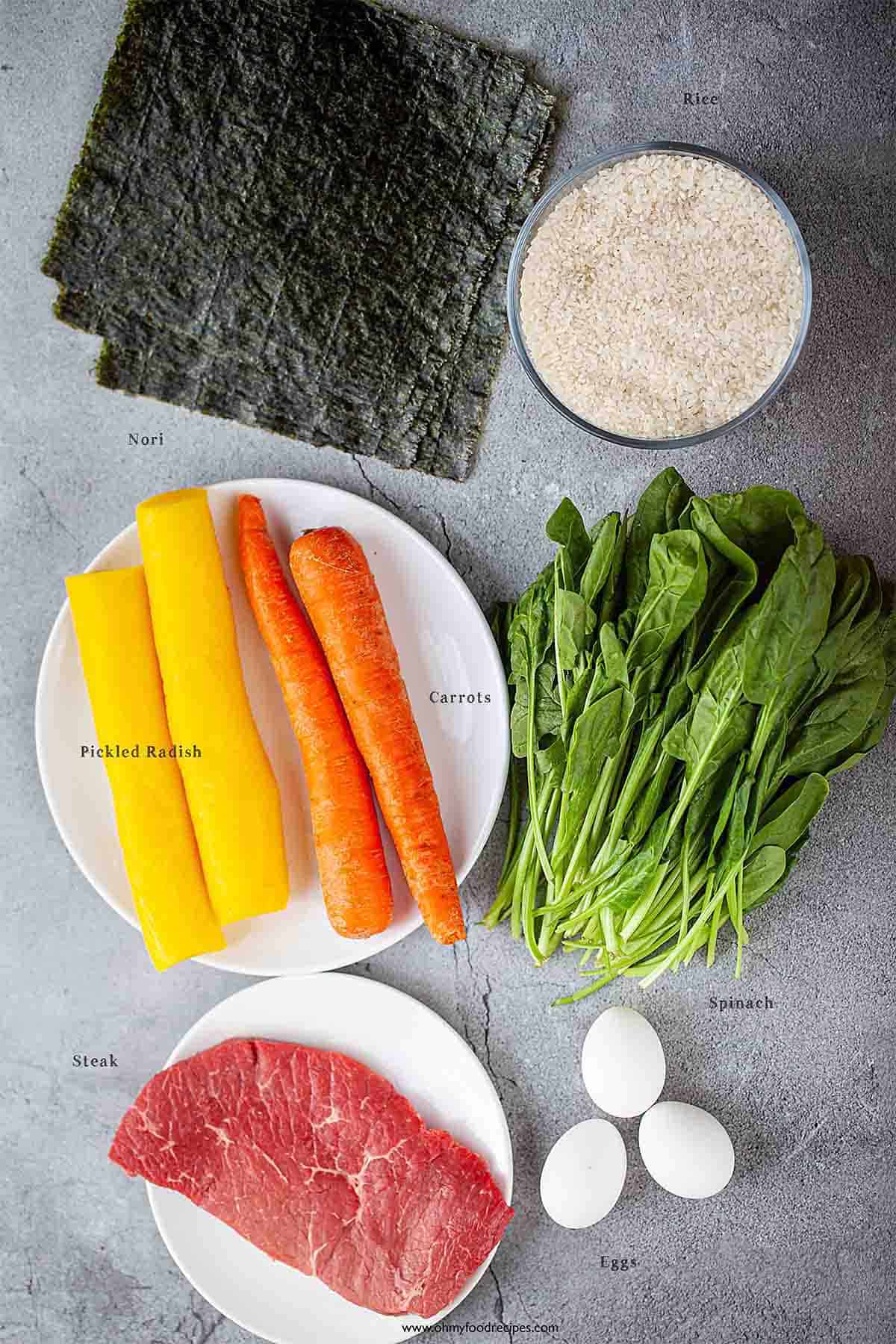
I first learned about kimbap in elementary school when a Korean classmate brought homemade rolls his mother had prepared for lunch. For this beef kimbap recipe, I use sesame-seasoned rice, seaweed, and five fillings: marinated beef, spinach, eggs, yellow pickled radish, and carrots.
- Rice: I use Calrose, a medium-grain rice that becomes tender and slightly sticky when cooked, helping the rolls hold together. Season it with sesame oil and salt.
- Seaweed sheets (gim or nori): Use full-size sheets intended for rolling, rather than small seaweed snack sheets.
- Beef: Thinly sliced top round steak is marinated with soy sauce, brown sugar, garlic powder, and sesame oil for a savory filling with a touch of sweetness.
- Spinach: Blanch, drain, and squeeze out excess water before seasoning with sesame oil and salt. Removing the moisture helps prevent soggy rolls.
- Eggs: Cook beaten eggs into a thin omelet, then slice into strips for a mild, tender filling.
- Yellow pickled radish (danmuji): Adds sweet, tangy flavor and crunch. Use long strips made for kimbap or cut a larger piece into strips.
- Carrots: Cut into thin strips and sauté with a little oil and salt until tender.
You'll also need a little vegetable oil for cooking and sesame oil to brush over the finished rolls. See the recipe card below for exact measurements and seasoning amounts.
Kimbap Substitutions and Variations
You can adapt this beef kimbap recipe to suit the ingredients you have. Here are some filling swaps and variations to try:
- Rice: Substitute Japanese short-grain white rice for Calrose. Season with sesame oil and salt as directed in the recipe.
- Beef: Use cooked ham, pan-fried Spam, or imitation crab sticks instead of marinated beef. These ingredients are already seasoned, so skip the beef marinade.
- Tuna kimbap: Replace the beef with well-drained canned tuna mixed with a little mayonnaise. Use just enough mayonnaise to bind the tuna without making the filling wet.
- Vegetables: Swap spinach for cucumber strips with the watery seed center removed, or use sautéed mushrooms. Drain cooked vegetables well before assembling.
- Pickled radish: Korean yellow pickled radish (danmuji) adds a characteristic sweet, tangy crunch to kimbap. If unavailable, try another crunchy pickled daikon, draining it well and expecting a slightly different flavor.
- Vegetarian kimbap: Replace the beef with pan-fried firm tofu or sautéed mushrooms and keep the eggs. For a vegan version, omit the eggs too and check the labels on your remaining ingredients.
- Spicy kimbap: Add a small amount of chopped, well-drained kimchi, or mix a little gochujang into the tuna filling.
Keep the fillings relatively dry and avoid overfilling. Swap ingredients rather than adding too many extras so the seaweed can close around the rice and fillings.
How to Store and Reheat Kimbap
Kimbap tastes best freshly made, when the rice is soft, and the fillings have their best texture. Refrigeration firms up the rice, but you can reheat properly stored leftovers to soften it.
How to Store Kimbap
Place leftover rolls or slices in an airtight container and refrigerate at 40°F (4°C) or below. For the best texture, aim to eat them within 1-2 days.
Refrigerate kimbap within 2 hours of preparation, or 1 hour if the temperature is above 90°F (32°C). This applies to vegetable kimbap too, because cooked rice also needs proper storage. Discard kimbap left out beyond these limits. For picnics or packed lunches, use an insulated bag with ice packs. USDA food-storage guidance
Can I Freeze Kimbap?
Yes, you can freeze beef kimbap, although the texture will change. The seaweed and vegetables may soften after reheating, so freshly made kimbap has the best texture.
To freeze, refrigerate the freshly prepared kimbap to cool, then portion the slices into freezer-safe containers or bags. Separate layers with parchment paper to prevent sticking, remove excess air, and label with the date.
To reheat from frozen, arrange slices on a microwave-safe plate and cover with a lightly damp paper towel. Use the defrost setting first if needed, then heat in short intervals, turning or rearranging the slices for even heating. Check that the centers reach 165°F (74°C). You can also thaw kimbap overnight in the refrigerator before reheating; avoid thawing it on the counter. USDA guidance on freezing and reheating leftovers
How to Reheat Kimbap
Microwave: Arrange slices in a single layer on a microwave-safe plate and cover with a lightly damp paper towel. Heat in short intervals, checking the centers until heated through. The rice will soften, though the seaweed may soften as well.
When reheating, check that the center reaches 165°F (74°C) with a food thermometer. Reheating does not make improperly stored kimbap safe to eat. USDA leftover-safety guidance
Tips for Making Kimbap
Prepare the Rice
- Measure the water carefully. Follow the rice-to-water ratio for the cooking method in this recipe. Before cooking, gently level the rice so it is evenly submerged.
- Season while warm. Gently fold in the sesame oil and salt without mashing the grains.
- Cool slightly before rolling. The rice should be comfortably warm and no longer steaming heavily. Hot rice can soften the seaweed, while cold rice is harder to spread.
Drain the Spinach and Fillings
- Wash spinach thoroughly. Swish it in a bowl of cold water to loosen sand, then lift it out, leaving the grit behind. Repeat with fresh water as needed.
- Blanch just until wilted. Drain and rinse under cold water to stop the cooking.
- Squeeze out excess moisture. Do this before seasoning the spinach to help prevent soggy kimbap.
- Keep other fillings relatively dry. Drain the beef of excess cooking liquid and pat the pickled radish dry. Cut fillings into even strips so they are easier to arrange.
Roll the Kimbap
- Prepare your mat. Wrap the bamboo rolling mat in plastic wrap for easier cleanup. Place the seaweed shiny-side down.
- Spread a thin, even layer of rice. Lightly dampen your fingers to prevent sticking, but avoid dripping water onto the seaweed.
- Leave a border. Keep about 1-1½ inches of seaweed uncovered at the top to help the roll close.
- Avoid overfilling. Arrange the fillings in a compact line across the rice near the edge closest to you. Too much filling makes the roll difficult to close.
- Roll with gentle, even pressure. Lift the nearest edge of the mat, tuck the rice and seaweed over the fillings, and continue rolling. Pull the mat away as you go so it does not get wrapped inside.
- Rest seam-side down briefly. This helps the roll hold its shape before slicing.
Slice Neatly
- Brush lightly with sesame oil. Coat the outside of each roll for flavor and a light sheen.
- Use a sharp knife. Lightly oil the blade and cut with a gentle slicing motion rather than pressing straight down.
- Wipe the blade between cuts. Removing stuck rice helps keep the slices neat. Cut into bite-sized pieces about ½-¾ inch thick.
See the step-by-step photos and video for a closer look at how to arrange the fillings and roll the kimbap.
Kimbap Troubleshooting:
Why does my kimbap fall apart?
The roll may be too loose or overfilled. Spread the rice thinly, use fewer fillings, and tuck the seaweed snugly around them during the first turn. Apply gentle, even pressure with the bamboo mat, then rest the roll seam-side down before slicing.
Why does my seaweed tear?
Too much filling, wet ingredients, or heavy pressure can tear the seaweed. Drain the fillings well, let steaming-hot rice cool slightly, and use full-size seaweed sheets intended for rolling. Lightly dampen your fingers before spreading the rice to avoid water dripping onto the sheet.
Why is my kimbap soggy?
Excess moisture from spinach, beef cooking juices, or pickled radish can soften the rice and seaweed. Squeeze the spinach thoroughly, drain the beef, and pat the radish dry before assembling. Some softening is normal as the seaweed absorbs moisture from the rice.
Why does the rice stick to my knife?
Sticky rice can build up on the blade and pull the roll apart. Use a sharp knife and wipe it clean between cuts. Slice gently instead of pushing straight down.
Why won't the seaweed edge stay closed?
Rice or fillings may be covering the closing edge. Leave a 1-1½-inch border at the top. If the edge still lifts, press a few cooked rice grains along it to help it stick, then briefly place the roll seam-side down.
FAQS :
Yes. You can roll kimbap by hand or use a clean kitchen towel covered with food-safe plastic wrap for support. Keep the fillings compact, tuck the seaweed snugly around them, and apply gentle, even pressure as you roll.
Kimbap is usually flavorful enough to enjoy without dipping sauce because the rice and fillings are already seasoned. You can serve soy sauce on the side if you prefer, but taste a piece first.
Yes, although you'll lose some of the sweet, tangy crunch that balances the rice and savory fillings. Another well-drained pickled daikon can work as a substitute. Cucumber adds crunch but will give the rolls a milder flavor.
How to Make Kimbap (Step-by-Step)
Cook and Season the Rice:

1. Wash and drain 3 cups of rice very well. Then, put it into an Instant Pot pressure cooker and add 3 cups of water. Make sure the rice is level and covered in the water. Close the lid and vent. Press the manual button, set the time to 6 minutes, and select natural release.

Afterward, put the cooked rice into a mixing bowl, add ½ teaspoon of salt, 1 tablespoon of sesame oil, and mix well. Set it aside and let it cool off.
Prepare the Fillings:
Beef:

2. Cut 1 pound of beef round steak into strips.

After that, put the beef in a container and add ½ teaspoon of garlic powder, 2 tablespoons of soy sauce, 1 tablespoon of brown sugar, and 1 tablespoon of sesame oil. Mix it well and let it marinate for at least 15 minutes.

Next, stir-fry the beef until it changes color.
Carrots:

3. Peel and cut 2 small carrots into strips.

And stir-fry them in a pan with ½ tablespoon of vegetable oil and ⅛ teaspoon of salt. Cover with a lid and cook the carrots until they're soft.
Eggs:

4. Beat 3 eggs in a bowl. Then, pour ½ tablespoon of vegetable oil into a non-stick pan and turn the heat to medium-low to pan-fry the eggs.

Then, cut the eggs into strips.
Spinach:

5. Wash and soak 1 bunch of spinach very well. Then, boil them in water.
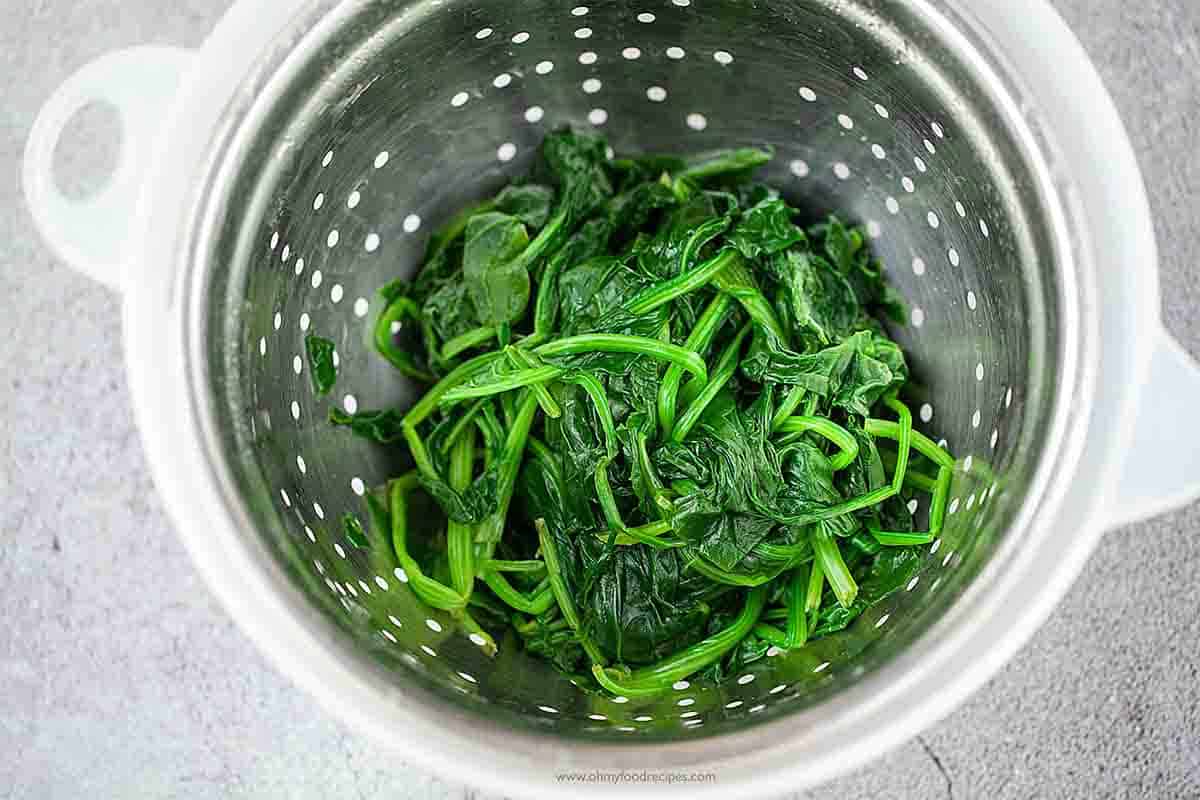
After that, drain the water and rinse it under cold water. Remove excess water by squeezing the spinach.

Put the cooked spinach in a container, add ⅛ teaspoon of salt and 1 teaspoon of sesame oil, then mix well.

6. Cut 1 piece of yellow pickled radish into long strips.
Rolling:

7. Now, the kimbap filling ingredients are ready. Let's wrap kimbap.

Roll the Kimbap:
First, put a nori on a bamboo sushi roll mat. Second, put a thin layer of seasoned rice on the nori. Remember to leave some space at the top, around 1- 1.5 inches.

Third, add fillings and roll the gimbap with a bamboo sushi mat. See the details in the video below the recipe card.

Brush with Sesame Oil and Slice:
8. Next, brush or wipe some sesame oil around the Korean sushi rolls.

9. Then, slice kimbap rolls into bite-sized pieces.

Enjoy this Korean sushi roll kimbap recipe! Also, check out these recipes: steamed garlic shrimp, how to make chili oil, tonkatsu, Asian shaved ice, and red bean mochi.
Sushi and Rice Recipes You May Like
If you enjoyed this kimbap recipe, try these portable sushi and rice dishes next:
- California Rolls - Inside-out sushi rolls filled with imitation crab, avocado, and cucumber.
- Inari Sushi - Seasoned sushi rice tucked inside sweet and savory fried tofu pockets.
- Hawaiian Spam Musubi - Seasoned Spam and rice wrapped together with a strip of seaweed.
- Salmon Sushi Cups - Baked salmon and rice in individual nori cups, topped with creamy avocado and spicy mayo.
Subscribe to Oh My Food Recipes to get our new recipes delivered straight to your inbox! Follow along on Facebook, Pinterest, and Instagram for all the latest updates.

Kimbap (김밥)
Equipment
- 1 Bamboo sushi mat
- 1 Pan
- 1 Pot
- 1 Pressure cooker or rice cooker
Video
Ingredients
- 1 piece Yellow pickled radish (big piece)
- 7 sheets Nori/ Seaweed sheets nori
- ½ teaspoon Sesame oil (Brushing the rolls before cutting)
Rice
- 3 cups Calrose rice (uncooked)
- 3 cups Water
Rice Seasoning:
- ½ teaspoon Salt
- 1 tablespoon Sesame oil
Beef
- 1 pound Top round steak
Steak Seasoning:
- ½ teaspoon Garlic powder
- 2 tablespoons Soy sauce
- 1 tablespoon Brown sugar
- 1 tablespoon Sesame oil
Spinach
- 1 bunch Spinach
Spinach Seasoning:
- ⅛ teaspoon Salt
- 1 teaspoon Sesame oil
Carrot
- 2 pieces Carrot (small one)
Carrots stir fried:
- ½ tablespoon Vegetable oil
- ⅛ teaspoon Salt
Egg
- 3 Eggs
Eggs pan fried:
- ½ tablespoon vegetables oil
Instructions
How to make Kimbap Korean sushi rolls
- Wash and drain 3 cups of rice very well. Then, put into instant pot pressure cooker and add 3 cups of water. Make sure the rice is level off and covered in the water. Close the lid and vent. Push manual button and adjust time for 6 minutes and natural release. Afterward, put the cooked rice into a mixing bowl, add ½ teaspoon of salt, 1 tablespoon of sesame oil and mix them well. Set it aside and let it cool off.
- Cut 1 pound of beef round steak into strips. After that, put the beef into a container and add ½ teaspoon garlic powder, 2 tablespoons soy sauce, 1 tablespoon brown sugar and 1 tablespoon sesame oil. Mix it well and let it marinate for at least 15 minutes. Next, stir fry the beef until it changes color.
- Peel and cut 2 small carrots into strips and stir fry them by adding ½ tablespoon of vegetable oil and ⅛ teaspoon of salt into a pan. Cover the lid and cook the carrots until it's soft.
- Beat 3 eggs, add ½ tablespoon of vegetable oil into a non-stick pan and turn on medium small fire to pan fry the eggs. Then, cut the eggs into strips.
- Wash and soak 1 bunch of spinach very well. Then, boil them in water. After that, drain the water and rinse it under cold water. Remove excess water by squeezing the spinach. Put the cooked spinach in a container, add ⅛ of teaspoon salt, 1 teaspoon of sesame oil and mix them well.
- Cut 1 piece of yellow pickled radish into long strips.
- Now, the kimbap filing ingredients are ready. Let's wrap kimbap. First, put a nori on a bamboo sushi roll mat. Second, put a thin layer of seasoned rice on nori. Remember to leave some space at the top around 1-1.5 inch. Third, add fillings and roll the gimbap with a bamboo sushi mat. See the details in the video.
- Brush or wipe some sesame oil around Korean sushi rolls.
- Slice kimbap rolls into bite sized pieces.
Notes
Tips for Making Kimbap
Prepare the Rice
- Measure the water carefully. Follow the rice-to-water ratio for the cooking method in this recipe. Before cooking, gently level the rice so it is evenly submerged.
- Season while warm. Gently fold in the sesame oil and salt without mashing the grains.
- Cool slightly before rolling. The rice should be comfortably warm and no longer steaming heavily. Hot rice can soften the seaweed, while cold rice is harder to spread.
Drain the Spinach and Fillings
- Wash spinach thoroughly. Swish it in a bowl of cold water to loosen sand, then lift it out, leaving the grit behind. Repeat with fresh water as needed.
- Blanch just until wilted. Drain and rinse under cold water to stop the cooking.
- Squeeze out excess moisture. Do this before seasoning the spinach to help prevent soggy kimbap.
- Keep other fillings relatively dry. Drain the beef of excess cooking liquid and pat the pickled radish dry. Cut fillings into even strips so they are easier to arrange.
Roll the Kimbap
- Prepare your mat. Wrap the bamboo rolling mat in plastic wrap for easier cleanup. Place the seaweed shiny-side down.
- Spread a thin, even layer of rice. Lightly dampen your fingers to prevent sticking, but avoid dripping water onto the seaweed.
- Leave a border. Keep about 1-1½ inches of seaweed uncovered at the top to help the roll close.
- Avoid overfilling. Arrange the fillings in a compact line across the rice near the edge closest to you. Too much filling makes the roll difficult to close.
- Roll with gentle, even pressure. Lift the nearest edge of the mat, tuck the rice and seaweed over the fillings, and continue rolling. Pull the mat away as you go so it does not get wrapped inside.
- Rest seam-side down briefly. This helps the roll hold its shape before slicing.
Slice Neatly
- Brush lightly with sesame oil. Coat the outside of each roll for flavor and a light sheen.
- Use a sharp knife. Lightly oil the blade and cut with a gentle slicing motion rather than pressing straight down.
- Wipe the blade between cuts. Removing stuck rice helps keep the slices neat. Cut into bite-sized pieces about ½-¾ inch thick.



Leave a Reply