
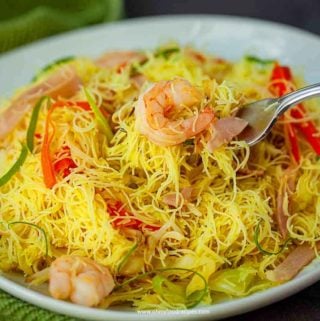
Singapore noodles, also known as Singapore rice noodles or Singapore mei fun (星州米粉), are a classic Cantonese-style stir-fried rice vermicelli dish popular at Hong Kong cafés (cha chaan teng) and Chinese restaurants around the world. Made with tender shrimp, ham, crisp vegetables, and fragrant curry powder, these golden-yellow noodles are savory, flavorful, and ready in just 20 minutes. They're perfect for busy weeknight dinners, meal prep, lunch boxes, or family gatherings.
Growing up in Hong Kong and southern China, I frequently ordered Singapore noodles at Hong Kong-style cafés and Cantonese restaurants. Over the years, I've tested this recipe many times to recreate the same flavor, perfectly seasoned curry noodles, and restaurant-quality texture using simple ingredients and easy techniques that anyone can make at home.
If you enjoy Chinese takeout favorites, be sure to try beef chow fun, lobster yee mein, ramen noodle stir-fry, crispy pan-fried noodles, chicken udon stir-fry, and soy sauce noodles for more authentic noodle recipes.
Love noodles? Check out these recipes: japchae (Korean glass noodles), Korean jajangmyeon, hot and sour noodle soup, wonton noodle soup, beef pho noodle soup, pad Thai, laksa noodle soup, and Hong Kong lo mein.

What Are Singapore Noodles?
Singapore noodles, also known as Singapore rice noodles or Singapore mei fun, are called Sing Jau Chow Mai Fun (星洲炒米粉) in Cantonese. Many Cantonese speakers simply shorten the name to Sing Jau Chow Mai (星洲炒米) in everyday conversation. In Mandarin, the dish is called Xīng Zhōu Chǎo Mǐ Fěn (星洲炒米粉).
This popular Cantonese-style stir-fried noodle dish is made with thin rice vermicelli, shrimp, eggs, vegetables, and fragrant curry powder. Everything is quickly stir-fried over high heat in a hot wok, creating tender noodles with a light smoky flavor known as wok hei. If you enjoy dishes like beef chow fun, soy sauce noodles, and vegetable chow mein, you'll love the savory flavor and texture of Singapore noodles.
One of the most recognizable features of Singapore noodles is their vibrant golden-yellow color, which comes from curry powder. The curry powder adds a warm, aromatic flavor with mild spice that sets this dish apart from other Chinese noodle favorites like chow mein or lo mein.
Why Are Singapore Noodles Called Singapore Noodles?
Despite their name, Singapore noodles did not originate in Singapore. Most food historians believe Cantonese chefs in Hong Kong created the dish during the 1950s or 1960s, although its exact origin remains uncertain. At the time, curry powder was often associated with Southeast Asian flavors, so the name "Singapore noodles" was likely chosen to give the dish a visual appeal rather than indicate where it came from.
Today, Singapore noodles are a staple at Hong Kong-style cafés (cha chaan teng) and Cantonese restaurants around the world. While they're widely enjoyed in Hong Kong, they're rarely found in Singapore in the same form, making the name one of the most interesting stories behind this popular Chinese stir-fried noodle dish.
What Do Singapore Noodles Taste Like?
Singapore noodles have a savory, slightly smoky, and aromatic curry flavor with a mild hint of spice. Although they're coated in curry powder, the dish isn't typically very spicy. Instead, the curry adds warm, fragrant notes that complement the savory seasonings.
The thin rice vermicelli absorbs the curry seasoning and sauces beautifully, while the shrimp, ham, eggs, and crisp vegetables add layers of texture and richness. When stir-fried over high heat, the noodles develop a subtle smoky flavor known as wok hei, like beef chow fun, giving Singapore noodles their signature restaurant-style taste.
Why You'll Love This Singapore Noodles Recipe
- Step-by-step photos and video tutorial
- Restaurant-quality flavor at home
- Ready in just 20 minutes
- Authentic Cantonese-inspired recipe
- Better than takeout
- Easy to customize with your favorite proteins and vegetables
- Perfect for weeknight dinners, meal prep, and lunch boxes
What Noodles Are Used for Singapore Noodles?
Singapore noodles are traditionally made with thin rice vermicelli noodles, also known as mei fun or mai fun in Chinese. These delicate rice noodles cook quickly, absorb the fragrant curry seasoning beautifully, and stay light and tender when stir-fried over high heat.

For this recipe, I use Wai Wai brand rice vermicelli noodles, which are made with 90% rice and 10% water. Some brands use 100% rice, and both work well. The most important thing is to choose thin rice vermicelli noodles rather than thicker rice sticks, as the thinner noodles create the authentic texture found in Hong Kong-style Singapore noodles.
Singapore Noodles vs. Chow Mein: What's the Difference?
Although both are popular Chinese stir-fried noodle dishes, Singapore noodles and chow mein are quite different. Singapore noodles are made with thin rice vermicelli and seasoned with fragrant curry powder, giving them their signature golden color and aromatic flavor. Chow mein, on the other hand, is made with wheat egg noodles and is typically seasoned with soy sauce-based sauces rather than curry.
If you enjoy Singapore noodles, you may also like my vegetable chow mein, crispy pan-fried noodles, or soy sauce noodles, which offer different flavors while using similar stir-frying techniques.
| Feature | Singapore Noodles | Chow Mein |
| Noodles | Thin rice vermicelli | Wheat egg noodles |
| Flavor | Curry powder | Soy sauce-based |
| Color | Golden yellow | Brown |
| Texture | Light and tender | Chewy |
| Main seasoning | Curry powder | Soy sauce, oyster sauce |
What Ingredients Are in Singapore Noodles?
Traditional Singapore noodles are made with thin rice vermicelli noodles, shrimp, vegetables, eggs, curry powder, and savory seasonings. Different restaurants and home cooks use slightly different ingredients, but these are the foundation of this classic Cantonese-style stir-fried noodle dish. In this recipe, I use rice vermicelli, cabbage, bean sprouts, carrots, shrimp, honey ham, and fragrant curry powder to recreate the restaurant-style flavor I grew up enjoying.

You can easily customize Singapore noodles with other ingredients, such as green or red bell peppers, char siu (Chinese BBQ pork), chicken, beef, tofu, or scrambled eggs. While some home cooks add a small amount of turmeric powder for a brighter yellow color, the signature golden hue and distinctive flavor traditionally come from curry powder.
Singapore Noodles Substitutions:
Here are a few easy substitutions if you need to adjust this Singapore noodles recipe:
Gluten-free: Use gluten-free soy sauce or tamari, and make sure your curry powder is certified gluten-free if needed.
Rice vermicelli: Thin rice vermicelli noodles are traditional. If you can't find it, you can use thin glass noodles (mung bean noodles) or Pad Thai rice noodles. Keep in mind that thicker noodles will have a slightly different texture and may require a longer cooking time.
Shrimp: Replace the shrimp with chicken, beef, char siu (Chinese BBQ pork), pork, tofu, or simply add more vegetables.
Honey ham: Honey ham adds a touch of sweetness, but char siu is the more traditional choice. Cooked ham, roast pork, or chicken also work well.
Vegetables: Feel free to substitute or add vegetables such as bell peppers, mushrooms, snow peas, onions, baby bok choy, or napa cabbage.
Curry powder: Curry powder gives Singapore noodles their signature flavor and golden color. If you don't have it, you can use a small amount of turmeric powder for color, but the flavor will be different. Without curry powder, the dish will no longer have the classic taste of Singapore noodles.
How to Store and Reheat Singapore Noodles
Refrigerate
Let the Singapore noodles cool completely before transferring them to an airtight container. Store them in the refrigerator for up to 3 days.
Can You Freeze Singapore Noodles?
Freezing isn't recommended because the rice vermicelli can become soft and mushy after thawing, affecting the texture of the dish.
How to Reheat?
Microwave: Place the noodles in a microwave-safe bowl and cover with a damp paper towel. Heat for 1-2 minutes, stirring halfway through, until warmed through.
Stovetop: Heat a small amount of oil in a wok or skillet over medium heat. Add the noodles and stir-fry for 2-3 minutes until heated through. If they seem dry, add 1 tablespoon of water to help loosen the noodles and restore moisture.
Expert Tips for the Best Singapore Noodles
- Soak the rice vermicelli properly. Don't boil the rice noodles. Instead, soak them in warm water for 15-30 minutes until they're just softened but still slightly firm. Over-soaking can make the noodles mushy and cause them to break during stir-frying.
- Drain the noodles well. After soaking, drain the rice vermicelli thoroughly before adding it to the pan. Excess moisture can make the noodles soggy and prevent them from absorbing the seasonings evenly.
- Use a large non-stick pan. I like using a large non-stick pan because it helps prevent the delicate rice vermicelli from sticking, even with less oil. It's a great alternative if you don't have a wok.
- Cook the ingredients in stages. Stir-fry the vegetables and protein separately before cooking the noodles. Combine everything at the end to prevent overcrowding and ensure each ingredient is cooked perfectly.
- Season to taste. Curry powders vary in flavor and intensity, so start with the recommended amount and adjust to your preference. Taste the noodles before serving and add a little more curry powder, soy sauce, or salt if needed.
- Toss the noodles gently. Rice vermicelli is delicate and can break easily. Use chopsticks or tongs to gently lift and toss the noodles instead of stirring aggressively.
- Don't overcrowd the pan. Use a large pan so the noodles have enough room to stir-fry evenly. If the pan is too full, the noodles will steam instead of fry, resulting in a softer texture.
- Have everything ready before you start. Singapore noodles cook quickly, so chop the vegetables, prepare the protein, and measure the seasonings before heating the pan. This makes stir-frying faster and helps prevent overcooking.
Troubleshooting Singapore Noodles
Why are my rice noodles sticking together?
Rice noodles can stick together if they're soaked too long, not drained well, or cooked over low heat. To prevent sticking, soak the rice vermicelli just until softened, drain thoroughly, and stir-fry over medium-high to high heat with enough oil. A large non-stick skillet or well-seasoned wok also helps keep the noodles separated.
Why are my rice noodles breaking apart?
Rice vermicelli is delicate and can break if it's over-soaked or stirred too aggressively. Soak the noodles until they're just softened, then use chopsticks or tongs to gently toss them during stir-frying.
Why are my Singapore noodles mushy?
Mushy noodles are usually caused by soaking the rice vermicelli for too long or adding too much liquid during cooking. Slightly under-soaked noodles will finish cooking in the pan and hold their texture better.
Why don't my Singapore noodles have enough flavor?
Make sure the noodles are well drained before stir-frying so they can absorb the seasonings. Taste before serving and adjust with a little more curry powder, soy sauce, or salt if needed.
Why are my vegetables watery?
Vegetables release moisture if the pan isn't hot enough or if it's overcrowded. Stir-fry over medium-high to high heat and cook the vegetables in batches if needed.
Why is my shrimp rubbery?
Shrimp cooks very quickly. Remove it from the pan as soon as it turns pink and opaque to keep it tender and juicy.
FAQs About Singapore Noodles:
No. Despite the name, most food historians believe Singapore noodles were created in Hong Kong by Cantonese chefs. The dish combines Chinese stir-frying techniques with fragrant curry powder and has become a popular menu item at Hong Kong-style cafés (cha chaan teng) and Chinese restaurants around the world.
Yes. Soak the rice vermicelli in warm water for 15-30 minutes, or until it's just softened but still slightly firm. Avoid over-soaking, as the noodles will continue cooking during stir-frying and can become mushy or break apart.
Absolutely. Chicken is one of the most popular substitutes for shrimp. You can also use char siu (Chinese BBQ pork), beef, pork, tofu, or simply add more vegetables to customize the recipe.
Yes. Rice vermicelli is naturally gluten-free, but be sure to use gluten-free soy sauce or tamari and check that your curry powder is certified gluten-free if needed.
Yes. You can prepare Singapore noodles a day in advance and store them in an airtight container in the refrigerator. Reheat them in a skillet over medium heat or in the microwave until warmed through.
Freezing isn't recommended because rice vermicelli tends to become soft and mushy after thawing. For the best texture, enjoy the noodles fresh or refrigerate leftovers for up to 3 days.
Singapore noodles are delicious on their own, but if you enjoy extra heat, serve them with garlic chili sauce, XO sauce, or chili oil. I especially like XO sauce because its rich umami flavor pairs well with the fragrant curry seasoning without overpowering the dish.
Instructions for how to make Singapore mei fun:

Preparation:
1. Soak 2 pieces of rice noodles (7 oz) in a bowl for 15 to 30 minutes before cooking.
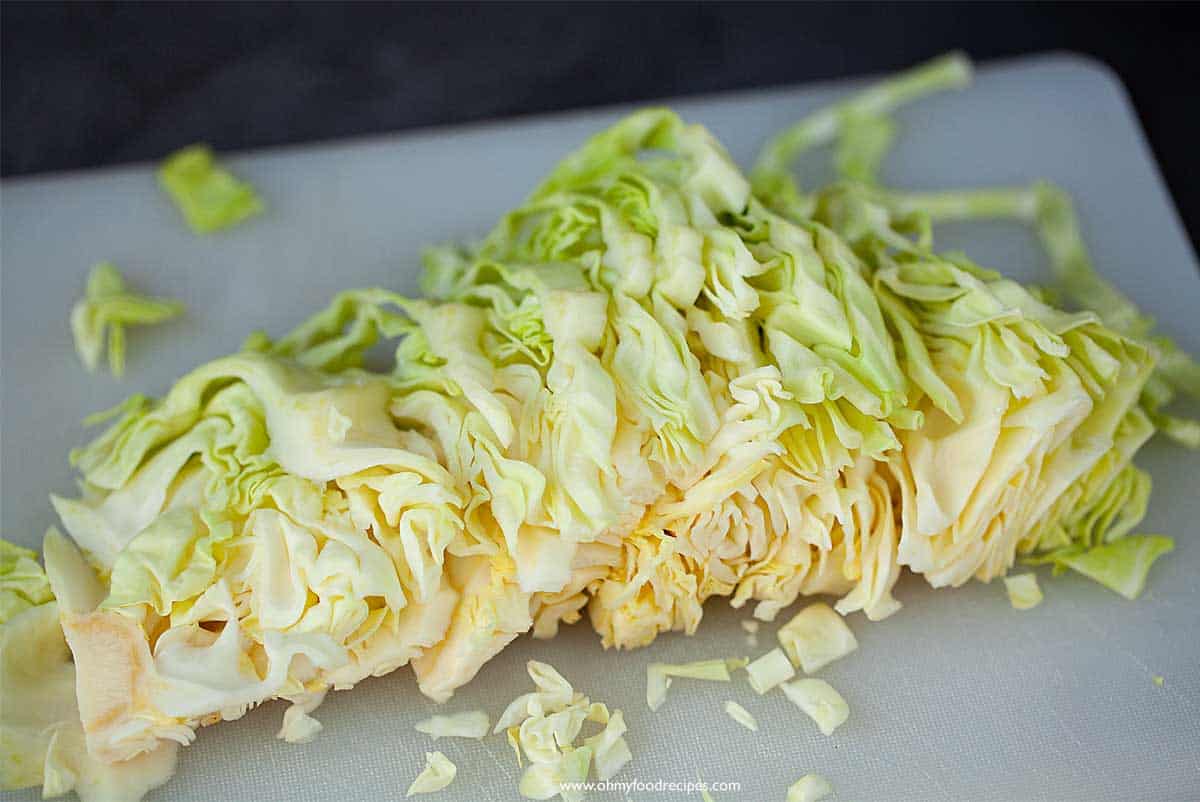
2. Wash and cut ¼ head of small-sized cabbage (8 oz) into strips.

3. Peel off the skin and cut 2 small carrots (4 oz) into strips.

4. Wash and cut 3 sticks of green onion (3 oz) into strips.

5. Then, cut 3 pieces of honey ham (4 oz) into strips as well.

Cooking:
6. Pour ½ tablespoon vegetable oil into the pan, and add the cut cabbage from step 2. Then, add 2 tablespoons of water and ⅛ teaspoon of salt. Stir-fry the cabbage a little bit. Cover and cook for 1-2 minutes, then stir-fry until tender. Set them aside.

7. After that, pour ½ tablespoon of vegetable oil, 2 tablespoons of water, and ⅛ teaspoon of salt. Stir-fry the carrot a little bit. Cover and cook for 1-2 minutes, stirring until tender. Then, set it aside.

8. Next, pour ½ tablespoon of vegetable oil into the pan. Then, add 3 cups of bean sprouts (12 oz) and ⅛ teaspoon of salt. Stir-fry for 1-2 minutes, until slightly soft. Let it sit aside.

9. In the next step, pour ½ tablespoon of vegetable oil into the pan, add 25 pieces of small raw shrimp, ⅛ teaspoon of salt, and stir-fry them until they turn color.

10. Next, add the cut honey ham from step 5, stir-fry it a little bit, and set it aside.

11. After, pour 1 tablespoon of vegetable oil into the pan, and add the soaked rice vermicelli noodles from step 1. Add ½ teaspoon of curry powder, ¼ cup of water, and ½ teaspoon of salt (adjust to taste). Stir-fry the noodles and mix them well with the curry powder.

12. Lastly, add the cooked cabbage, carrots, shrimp, honey ham, and green onion, and stir-fry them until they are well mixed.

Enjoy this simple and tasty Singapore rice noodles recipe! Also, check out these recipes: har gow, bulgogi beef, coconut bread, mango sticky rice, imitation shark fin soup, spicy lemon shrimp, Chinese pickled cucumber, and Vietnamese spring roll.
You May Also Like These Chinese Noodle Recipes
If you enjoy these homemade Singapore noodles, you'll also love these authentic Chinese noodle recipes:
- Beef Chow Fun (乾炒牛河) - Tender beef stir-fried with wide rice noodles and classic Cantonese flavors.
- Soy Sauce Noodles - A simple and flavorful Cantonese noodle dish made with savory soy sauce.
- Chicken Yi Mein Noodles - Soft egg noodles stir-fried with tender chicken and vegetables.
- Lobster Yee Mein - A restaurant-style Cantonese lobster noodle dish that's perfect for special occasions.
Subscribe to Oh My Food Recipes to get our new recipes delivered straight to your inbox! Follow along on Facebook, Pinterest, and Instagram for all the latest updates.
Singapore Rice Noodles
Equipment
- 1 Non-stick pan
Video
Ingredients
- 2 pieces Rice vermicelli noodles (Around 7 oz)
- ¼ head Cabbage (Small, 8 oz)
- 2 Carrots (Small, 4 oz)
- 3 sticks Green onion (3 oz)
- 3 cups Bean sprouts (12 oz)
- 3 pieces Honey ham (4 oz)
- 25 pieces Shrimp (Frozen raw small)
- 3 tablespoons Vegetable oil (1 tablespoon for stir fry noodles, ½ tablespoon for cabbage, ½ tablespoon for carrot, ½ tablespoon for bean sprout and ½ tablespoon for shrimp)
- ½ teaspoon Curry powder
- ½ cup Water (¼ cup for stir fry noodles, 2 tablespoons for stir fry cabbage, 2 tablespoons for stir fry carrots)
- 1 teaspoon Salt (½ teaspoon for stir fry noodles, ⅛ teaspoon for stir fry cabbage, ⅛ teaspoon for stir fry carrots, ⅛ teaspoon for stir fry bean sprout, ⅛ teaspoon for stir fry shrimp) Remember to add salt to your taste!
Instructions
- Soak 2 pieces of rice noodles (7 oz) in a bowl for 15 to 30 minutes before cooking.
- Wash and cut ¼ head of small-sized cabbage (8 oz) into strips.
- Peel off the skin and cut 2 small carrots (4 oz) into strips.
- Wash and cut 3 sticks of green onion (3 oz) into strips.
- Then, cut 3 pieces of honey ham (4 oz) into strips as well.
- Pour ½ tablespoon vegetable oil into the pan, and add the cut cabbage from step 2. Then, add 2 tablespoons of water and ⅛ teaspoon of salt. Stir-fry the cabbage a little bit. Cover and cook for 1-2 minutes, then stir-fry until tender. Set them aside.
- After that, pour ½ tablespoon of vegetable oil, 2 tablespoons of water, and ⅛ teaspoon of salt. Stir-fry the carrot a little bit. Cover and cook for 1-2 minutes, stirring until tender. Then, set it aside.
- Next, pour ½ tablespoon of vegetable oil into the pan. Then, add 3 cups of bean sprouts (12 oz) and ⅛ teaspoon of salt. Stir-fry for 1-2 minutes, until slightly soft Let it sit aside.
- In the next step, pour ½ tablespoon of vegetable oil into the pan, add 25 pieces of small raw shrimp, ⅛ teaspoon of salt, and stir-fry them until they turn color.
- Next, add the cut honey ham from step 5, stir-fry it a little bit and set it aside.
- After, pour 1 tablespoon of vegetable oil into the pan, and add the soaked rice vermicelli noodles from step 1. Add ½ teaspoon of curry powder, ¼ cup of water, and ½ teaspoon of salt (adjust to taste). Stir-fry the noodles and mix them well with the curry powder.
- Lastly, add the cooked cabbage, carrots, shrimp, honey ham, and green onion, and stir-fry them until they are well mixed.
Notes
Expert Tips for the Best Singapore Noodles:
- Soak the rice vermicelli properly. Don't boil the rice noodles. Instead, soak them in warm water for 15-30 minutes until they're just softened but still slightly firm. Over-soaking can make the noodles mushy and cause them to break during stir-frying.
- Drain the noodles well. After soaking, drain the rice vermicelli thoroughly before adding it to the pan. Excess moisture can make the noodles soggy and prevent them from absorbing the seasonings evenly.
- Use a large non-stick pan. I like using a large non-stick pan because it helps prevent the delicate rice vermicelli from sticking, even with less oil. It's a great alternative if you don't have a wok.
- Cook the ingredients in stages. Stir-fry the vegetables and protein separately before cooking the noodles. Combine everything at the end to prevent overcrowding and ensure each ingredient is cooked perfectly.
- Season to taste. Curry powders vary in flavor and intensity, so start with the recommended amount and adjust to your preference. Taste the noodles before serving and add a little more curry powder, soy sauce, or salt if needed.
- Toss the noodles gently. Rice vermicelli is delicate and can break easily. Use chopsticks or tongs to gently lift and toss the noodles instead of stirring aggressively.
- Don't overcrowd the pan. Use a large pan so the noodles have enough room to stir-fry evenly. If the pan is too full, the noodles will steam instead of fry, resulting in a softer texture.
- Have everything ready before you start. Singapore noodles cook quickly, so chop the vegetables, prepare the protein, and measure the seasonings before heating the pan. This makes stir-frying faster and helps prevent overcooking.


Leave a Reply