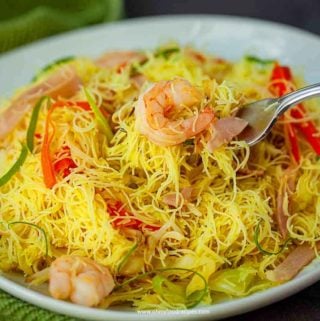
Singapore Rice Noodles
A classic Cantonese style Singapore rice noodle or xing zhou chow mei (星州米粉) is a very popular noodle dish among Chinese restaurants. Also, this Singapore noodles recipe is delicious and takes around 20 minutes! It’s great for party food, lunch or dinner.
Servings 6
Calories 97kcal
Equipment
- 1 Non-stick pan
Ingredients
- 2 pieces Rice vermicelli noodles (Around 7 oz)
- ¼ head Cabbage (Small, 8 oz)
- 2 Carrots (Small, 4 oz)
- 3 sticks Green onion (3 oz)
- 3 cups Bean sprouts (12 oz)
- 3 pieces Honey ham (4 oz)
- 25 pieces Shrimp (Frozen raw small)
- 3 tablespoons Vegetable oil (1 tablespoon for stir fry noodles, ½ tablespoon for cabbage, ½ tablespoon for carrot, ½ tablespoon for bean sprout and ½ tablespoon for shrimp)
- ½ teaspoon Curry powder
- ½ cup Water (¼ cup for stir fry noodles, 2 tablespoons for stir fry cabbage, 2 tablespoons for stir fry carrots)
- 1 teaspoon Salt (½ teaspoon for stir fry noodles, ⅛ teaspoon for stir fry cabbage, ⅛ teaspoon for stir fry carrots, ⅛ teaspoon for stir fry bean sprout, ⅛ teaspoon for stir fry shrimp) Remember to add salt to your taste!
Instructions
- Soak 2 pieces of rice noodles (7 oz) in a bowl for 15 to 30 minutes before cooking.
- Wash and cut ¼ head of small-sized cabbage (8 oz) into strips.
- Peel off the skin and cut 2 small carrots (4 oz) into strips.
- Wash and cut 3 sticks of green onion (3 oz) into strips.
- Then, cut 3 pieces of honey ham (4 oz) into strips as well.
- Pour ½ tablespoon vegetable oil into the pan, and add the cut cabbage from step 2. Then, add 2 tablespoons of water and ⅛ teaspoon of salt. Stir-fry the cabbage a little bit. Cover and cook for 1-2 minutes, then stir-fry until tender. Set them aside.
- After that, pour ½ tablespoon of vegetable oil, 2 tablespoons of water, and ⅛ teaspoon of salt. Stir-fry the carrot a little bit. Cover and cook for 1-2 minutes, stirring until tender. Then, set it aside.
- Next, pour ½ tablespoon of vegetable oil into the pan. Then, add 3 cups of bean sprouts (12 oz) and ⅛ teaspoon of salt. Stir-fry for 1-2 minutes, until slightly soft Let it sit aside.
- In the next step, pour ½ tablespoon of vegetable oil into the pan, add 25 pieces of small raw shrimp, ⅛ teaspoon of salt, and stir-fry them until they turn color.
- Next, add the cut honey ham from step 5, stir-fry it a little bit and set it aside.
- After, pour 1 tablespoon of vegetable oil into the pan, and add the soaked rice vermicelli noodles from step 1. Add ½ teaspoon of curry powder, ¼ cup of water, and ½ teaspoon of salt (adjust to taste). Stir-fry the noodles and mix them well with the curry powder.
- Lastly, add the cooked cabbage, carrots, shrimp, honey ham, and green onion, and stir-fry them until they are well mixed.
Video
Notes
Expert Tips for the Best Singapore Noodles:
- Soak the rice vermicelli properly. Don't boil the rice noodles. Instead, soak them in warm water for 15–30 minutes until they're just softened but still slightly firm. Over-soaking can make the noodles mushy and cause them to break during stir-frying.
- Drain the noodles well. After soaking, drain the rice vermicelli thoroughly before adding it to the pan. Excess moisture can make the noodles soggy and prevent them from absorbing the seasonings evenly.
- Use a large non-stick pan. I like using a large non-stick pan because it helps prevent the delicate rice vermicelli from sticking, even with less oil. It's a great alternative if you don't have a wok.
- Cook the ingredients in stages. Stir-fry the vegetables and protein separately before cooking the noodles. Combine everything at the end to prevent overcrowding and ensure each ingredient is cooked perfectly.
- Season to taste. Curry powders vary in flavor and intensity, so start with the recommended amount and adjust to your preference. Taste the noodles before serving and add a little more curry powder, soy sauce, or salt if needed.
- Toss the noodles gently. Rice vermicelli is delicate and can break easily. Use chopsticks or tongs to gently lift and toss the noodles instead of stirring aggressively.
- Don't overcrowd the pan. Use a large pan so the noodles have enough room to stir-fry evenly. If the pan is too full, the noodles will steam instead of fry, resulting in a softer texture.
- Have everything ready before you start. Singapore noodles cook quickly, so chop the vegetables, prepare the protein, and measure the seasonings before heating the pan. This makes stir-frying faster and helps prevent overcooking.
Nutrition
Calories: 97kcal | Carbohydrates: 8g | Protein: 2g | Fat: 7g | Saturated Fat: 1g | Polyunsaturated Fat: 4g | Monounsaturated Fat: 2g | Trans Fat: 0.05g | Cholesterol: 0.3mg | Sodium: 419mg | Potassium: 212mg | Fiber: 3g | Sugar: 4g | Vitamin A: 3452IU | Vitamin C: 22mg | Calcium: 31mg | Iron: 1mg
